








Austin’s Restaurant History Is Still on the Menu: 11 Local Institutions That Helped Shape Central Texas
Austin may be known nationally for what is new, but some of the places that best explain the city cannot be found in the latest development or restaurant opening.
They are in dining rooms where several generations of families have ordered the same enchiladas, barbecue pits that have been smoking meat longer than many neighborhoods have existed, and a South Austin dance hall where country music history still shares the room with chicken-fried steak.
The Texas Historical Commission's Texas Time Travel program recently highlighted 11 historic restaurants across the Austin metro area, from longtime Austin landmarks to barbecue institutions in Lockhart, Taylor, Elgin and Driftwood. Together, they offer something more meaningful than a collection of places to eat. They show how restaurants become part of a community's memory.
That idea has taken on fresh relevance this month. On Sept. 9, the National Restaurant Association launched Made in Restaurants, a national initiative focused on the role restaurants play not only in feeding communities, but also in creating jobs, teaching workplace skills, supporting entrepreneurship and giving people places to gather. The association describes restaurants as "community cornerstones" where connections are made and memories take shape. It also reports that 67% of U.S. adults have worked in the restaurant industry at some point in their lives.
In the Austin area, that larger story has been unfolding one dining room, dance floor and barbecue pit at a time for generations.
Austin Restaurants That Became Part of the City's Story
Few places blur the line between restaurant and cultural landmark quite like Broken Spoke, which James White opened on South Lamar Boulevard in 1964. Known for country music, dancing and chicken-fried steak, the Broken Spoke has hosted performers including Willie Nelson, George Strait and Dolly Parton. More than six decades later, the dance hall remains a physical connection to an older South Austin, even as the city has grown around it. The business was designated a Texas Treasure Business in 2014.
Just down South Lamar, Matt's El Rancho has an even longer family story. Matt Martinez began selling tamales from a wooden pushcart near the Texas Capitol as a child in 1923. He and his wife, Janie, opened El Rancho in 1952 with 10 tables, eventually moving the restaurant to its current South Lamar home in 1986. Members of the Martinez family continue the business today, carrying forward recipes and traditions that helped make Matt's one of Austin's best-known Tex-Mex restaurants.
On East Sixth Street, Cisco's Restaurant Bakery & Bar has been serving Austin since 1948. Founded by Rudy "Cisco" Cisneros, the family-run restaurant became known for breakfast favorites including huevos rancheros and migas. Its longevity also makes Cisco's a reminder of the deep Mexican American history of East Austin, a neighborhood that has experienced dramatic change around it.

Austin Barbecue With Stories That Survived the Decades
At House Park Bar-B-Que, longevity has included a remarkable comeback. The restaurant dates to 1943 and is home to what it identifies as Austin's oldest barbecue pit. A fire destroyed the building in 2020 and forced the restaurant to close for nearly four years, but the historic pit survived. House Park reopened in 2025 at its longtime West 12th Street location.
Bert's Bar-B-Q traces its beginnings to 1970, when Bert and Joyce Johnson opened a small barbecue restaurant near the University of Texas campus. The business grew through the 1970s and 1980s, and the Johnson family continued operating it after Bert Johnson's death in 1989. Today, Bert's remains on Far West Boulevard, carrying more than half a century of family history with it.
West of downtown, The County Line on the Hill began in 1975 inside the former Cedar Crest Lodge on Bee Cave Road. Original owners Bruce Walcutt, Rick Goss and Ed Norton were barbecue enthusiasts who had never actually cooked barbecue before launching the restaurant. They developed their smoking process through experimentation, and many items from the original 1975 menu remain available today. Skeeter Miller, who began working for the restaurant during its opening year, later became its owner and CEO.
Those stories help illustrate one of the central themes behind the Made in Restaurants campaign: restaurants can become long-term career paths as well as neighborhood gathering places. National Restaurant Association President and CEO Michelle Korsmo said the industry is where "communities come together" and where entrepreneurs build businesses that strengthen neighborhoods.
Around Austin, several of the clearest examples are found by following the smoke out of the city.
Central Texas Barbecue History Is Just a Short Drive Away
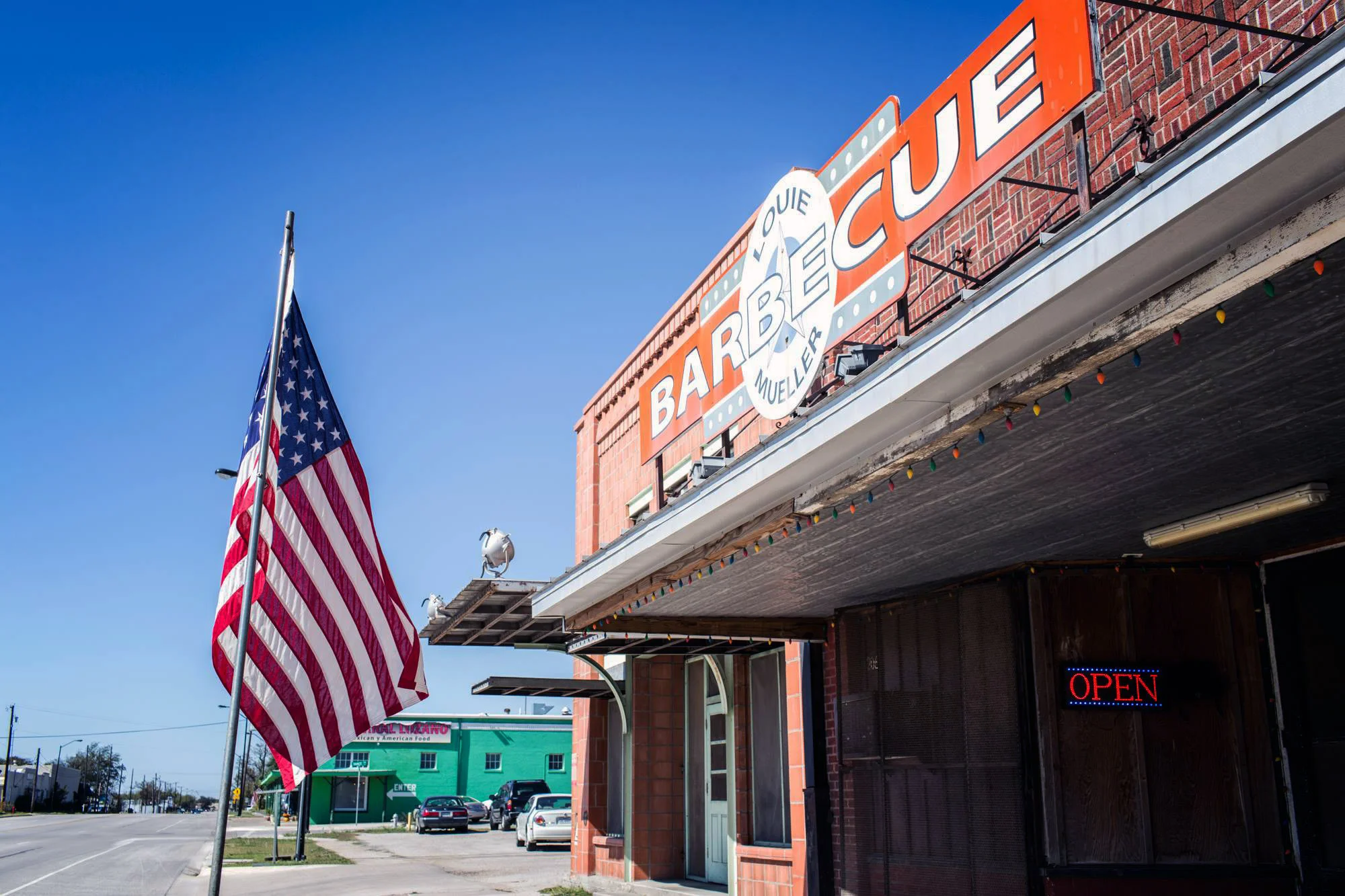
In Taylor, Louie Mueller Barbecue has been part of the community since 1949. Now operated by the third generation of the Mueller family, the restaurant has become one of the most recognized names in Texas barbecue and received an America's Classics award from the James Beard Foundation. For Austin-area residents, it remains one of the region's most enduring examples of a family restaurant becoming a destination without losing its hometown roots.
In Driftwood, The Salt Lick BBQ began in 1967 when Thurman Roberts turned a family barbecue tradition into a way to support his family. According to the restaurant's history, that tradition stretches back even further to Roberts' great-grandmother, Bettie Howard, who cooked barbecue over open coals during a wagon journey from Mississippi to Texas in the 1860s. The Roberts family continues the business today.
A drive east from Austin leads to Southside Market in Elgin, whose history reaches all the way back to 1882. Founder William Moon originally delivered meat by horse-drawn wagon, using smoking as a practical way to preserve meat in an era before refrigeration. The Bracewell family purchased the business in 1968 and expanded distribution of its Elgin sausage to area grocery stores, helping strengthen Elgin's association with smoked sausage across Texas.
And then there is Lockhart, where barbecue history is woven deeply into the city's identity.
Kreuz Market traces its beginnings to 1900, when Charles Kreuz Sr. purchased a local meat market. Longtime butcher Edgar Schmidt acquired the business from the Kreuz family in 1948, and members of the Schmidt family have operated it ever since. More than a century after its founding, Kreuz remains one of the most recognizable names associated with traditional Central Texas barbecue.
Nearby, The Original Black's Barbecue began as a Lockhart meat market in 1932. The business evolved into a barbecue restaurant under second-generation pitmaster Edgar Black, and the Black family has continued the tradition across generations. Its nearly century-long run offers another example of how a family business can become inseparable from the identity of the community around it.
More Than Places to Eat
Austin's restaurant scene changes quickly. New concepts arrive, neighborhoods evolve and dining trends come and go. That makes the endurance of these restaurants especially notable.
Texas Time Travel describes historic restaurants as familiar anchors in a rapidly changing city, places where grandparents return with grandchildren and former college students revisit years later. That may be the common thread connecting a dance hall on South Lamar, an East Austin breakfast institution and smoke-filled barbecue rooms across Central Texas.
Their significance is not simply that they are old.
These restaurants have employed generations of Central Texans, supported family businesses, helped define regional foods such as Tex-Mex and Central Texas barbecue, and provided familiar places for birthdays, first dates, family dinners, celebrations and ordinary Tuesdays. Some adapted to enormous changes around them. Others survived fires, ownership transitions and decades of shifting tastes.
And people kept coming back.
For Austin-area residents looking for historic restaurants near Austin, classic Texas barbecue, longtime Austin Tex-Mex or simply a place with a story behind the food, these businesses offer something that cannot be recreated overnight: decades of shared history.
As Austin and the surrounding communities continue to grow, places like these provide a reminder that preserving local character does not always mean putting something behind glass. Sometimes it means ordering a plate, pulling up a chair and helping keep the story going.
Stay tuned to My Neighborhood News for more stories about the restaurants, businesses and local traditions shaping communities across the Austin area.

 Tiffany Krenek has been on the My Neighborhood News team since August 2021. She is passionate about curating and sharing content that enriches the lives of our readers in a personal, meaningful way. A loving mother and wife, Tiffany and her family live in the West Houston/Cypress region.
Local business spotlight
Grow your business
where trust already lives.
Let’s introduce your business to the neighbors nearby.
Have a local favorite?
Let’s make an introduction.
Leave your email and our team will reach out with ways to promote your business.
Give a local favorite a little love.
Know a business your neighbors should discover? Tell us who they are.
We couldn’t send that just yet. Please try again.