







ACC Expands Electric Vehicle Training With $330,000 Grant for Central Texas Automotive Students
For Austin Community College students preparing to make a living under the hood, learning how to work on electric vehicles is becoming less of a specialty and more of a practical part of preparing for the automotive industry ahead.
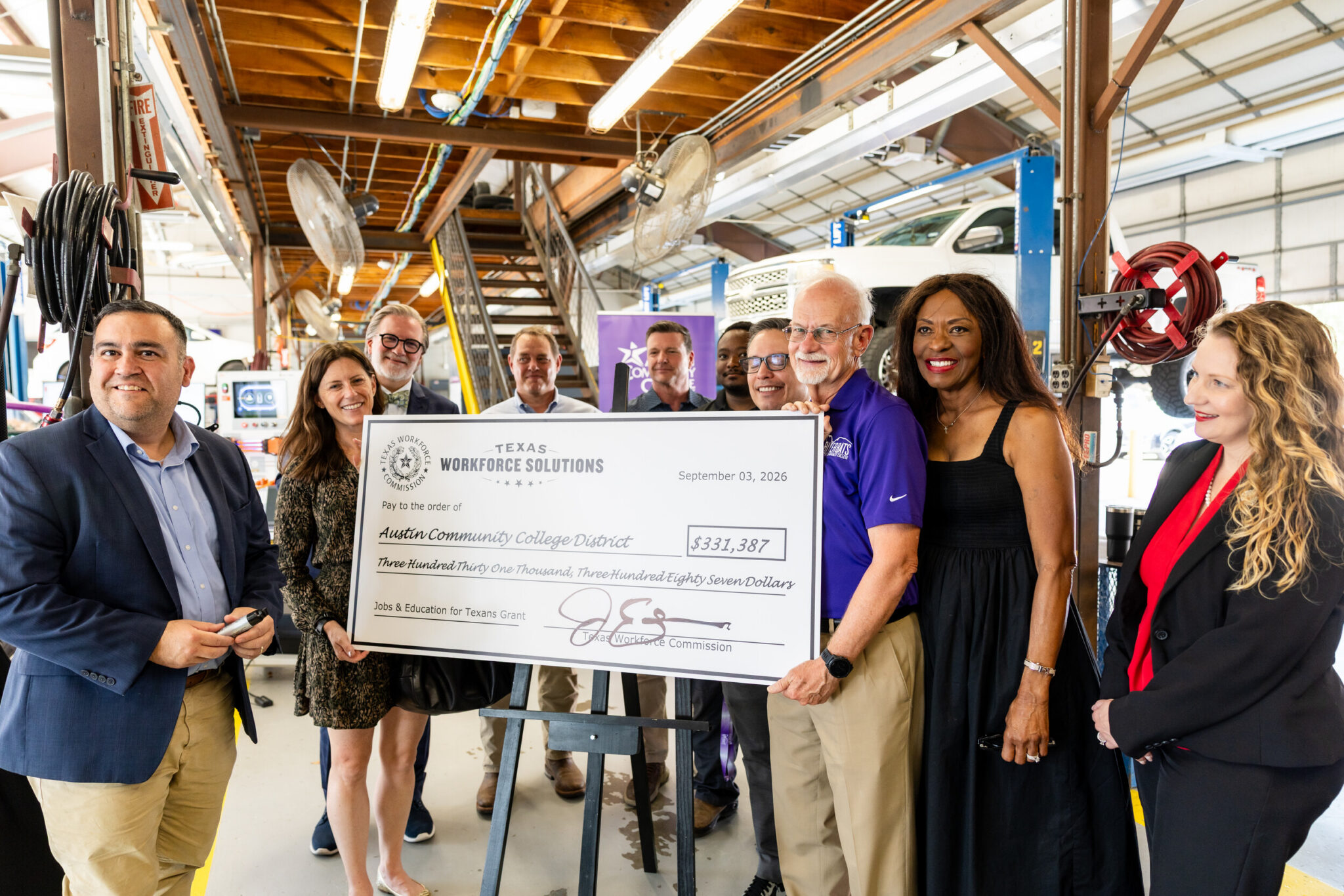
Austin Community College District has received approximately $330,000 through the Texas Workforce Commission’s Jobs and Education for Texans Grant Program to expand hands-on training in battery-electric vehicle technology and fleet maintenance.
The investment means students will have access to industry-standard equipment similar to what they may encounter after leaving the classroom for automotive shops, dealerships, fleet operations and other transportation workplaces across Central Texas.
For a region where transportation, manufacturing and skilled trades remain important parts of the economy, the grant also represents an effort to make sure local workforce training changes alongside the vehicles arriving on Texas roads.
“Transportation is changing quickly, and our students need more than a classroom to prepare for what’s next,” ACC Chancellor Dr. Russell Lowery-Hart said. “We have a responsibility to make sure students have the skills and confidence to step into a changing workforce, while helping employers find the talent they need to keep our region moving. This investment helps us do both. We’re grateful to the Texas Workforce Commission for investing in our students and the future of Central Texas.”
ACC Students Will Train on Electric Vehicle Technology Used in the Workforce
Texas Workforce Commission Chairman Joe Esparza presented the grant during a Sept. 3 event at ACC’s Riverside Campus.
Funding will allow the college to purchase battery-electric vehicle and fleet maintenance equipment, adding another layer of hands-on instruction to ACC’s Automotive Technology programs.
That practical experience matters as technicians increasingly encounter vehicles combining traditional mechanical systems with high-voltage batteries, electric powertrains and more advanced electronic components.
“It’s a tremendous partnership that’s required to make things happen across a region experiencing unprecedented economic growth, creating a need for skilled talent. To keep Texas competitive, we must ensure our workforce training keeps pace with industry,” said Mary York, Division Director of Workforce Development for the Texas Workforce Commission. “We can have all the training programs we want, but if they’re not using the equipment that they’re going to use in the workforce, we’re really not preparing them for success. The JET Grant helps these institutions purchase, install, and train on that state-of-the-art equipment, leading to licenses and certificates in high-paying jobs.”
The goal is straightforward: let students encounter the equipment, systems and challenges of newer vehicles while instructors are still nearby and mistakes are still part of the learning process.

Why Electric Vehicle Training Matters for Central Texas Students
For students entering automotive technology careers, familiarity can make a significant difference.
Electric vehicles and hybrids require technicians to understand systems that may not have been part of traditional automotive training years ago. Building those skills before entering the workforce can help graduates approach newer vehicles with experience rather than uncertainty.
ACC Automotive Technology student Avery Herrera described that confidence as one of the biggest benefits of working directly with the technology.
“The program really shows that electric vehicles are something that’s kind of growing in popularity among consumers, even in fleets. So when a new vehicle like a hybrid or an EV does come to a shop that you work at, it’s nothing new to you. It’ll be like muscle memory,” Herrera said. “It’s something that you will know how to work on, and it doesn’t frighten you as much as if you didn’t get experience in vehicles like these. If you can do it like that in training, you get the headspace of, ‘Okay, I know what to do. I know how to access these systems. I know how to handle these certain situations.’”
That experience could become increasingly useful not only at automotive repair shops but also in fleet maintenance, where organizations operating numerous vehicles must keep pace as newer technologies enter their fleets.
EV Training Begins at ACC Riverside With Round Rock Expansion Planned
The electric vehicle training equipment and program are currently based at ACC’s Riverside Campus, with plans to expand the opportunity to ACC’s Round Rock Campus.
ACC already uses its automotive programs to connect students with education leading toward jobs in vehicle repair and maintenance. The new equipment broadens that training into battery-electric vehicles and emerging transportation technologies while maintaining a focus on skills students can use on the job.
The JET Grant Program is designed specifically for that connection between education and employment.
Texas public junior colleges, state colleges, technical colleges and other eligible education providers can use JET funding to purchase and install equipment for career and technical education programs. Qualifying programs must lead to a license, certificate or post-secondary degree connected to a high-demand occupation.
ACC was one of three Central Texas schools recognized during the regional grant presentation. Hearne ISD and Lometa ISD also received JET grants as part of a broader state investment in career and technical education.
Preparing for the Next Generation of Automotive Careers
For Central Texas families weighing college costs, career training and employment options, programs like this offer another path into a field that continues to change along with the vehicles themselves.
The grant does not replace the fundamentals of automotive education. Instead, it adds newer technology to the same hands-on approach students have long relied on to learn how vehicles work, how problems are diagnosed and how repairs are safely completed.
For employers, that can mean a larger pool of technicians who have already worked with electric and hybrid technology before their first day on the job. For students, it can mean entering an interview or a service bay with fewer unfamiliar systems waiting for them.
And as automotive technology continues to evolve, that familiarity may be one of the most valuable tools ACC can put in a student’s toolbox.
Stay tuned to My Neighborhood News for more updates on Austin Community College programs, workforce training and education opportunities across Central Texas.

 Tiffany Krenek has been on the My Neighborhood News team since August 2021. She is passionate about curating and sharing content that enriches the lives of our readers in a personal, meaningful way. A loving mother and wife, Tiffany and her family live in the West Houston/Cypress region.
Local business spotlight
Grow your business
where trust already lives.
Let’s introduce your business to the neighbors nearby.
Have a local favorite?
Let’s make an introduction.
Leave your email and our team will reach out with ways to promote your business.
Give a local favorite a little love.
Know a business your neighbors should discover? Tell us who they are.
We couldn’t send that just yet. Please try again.