







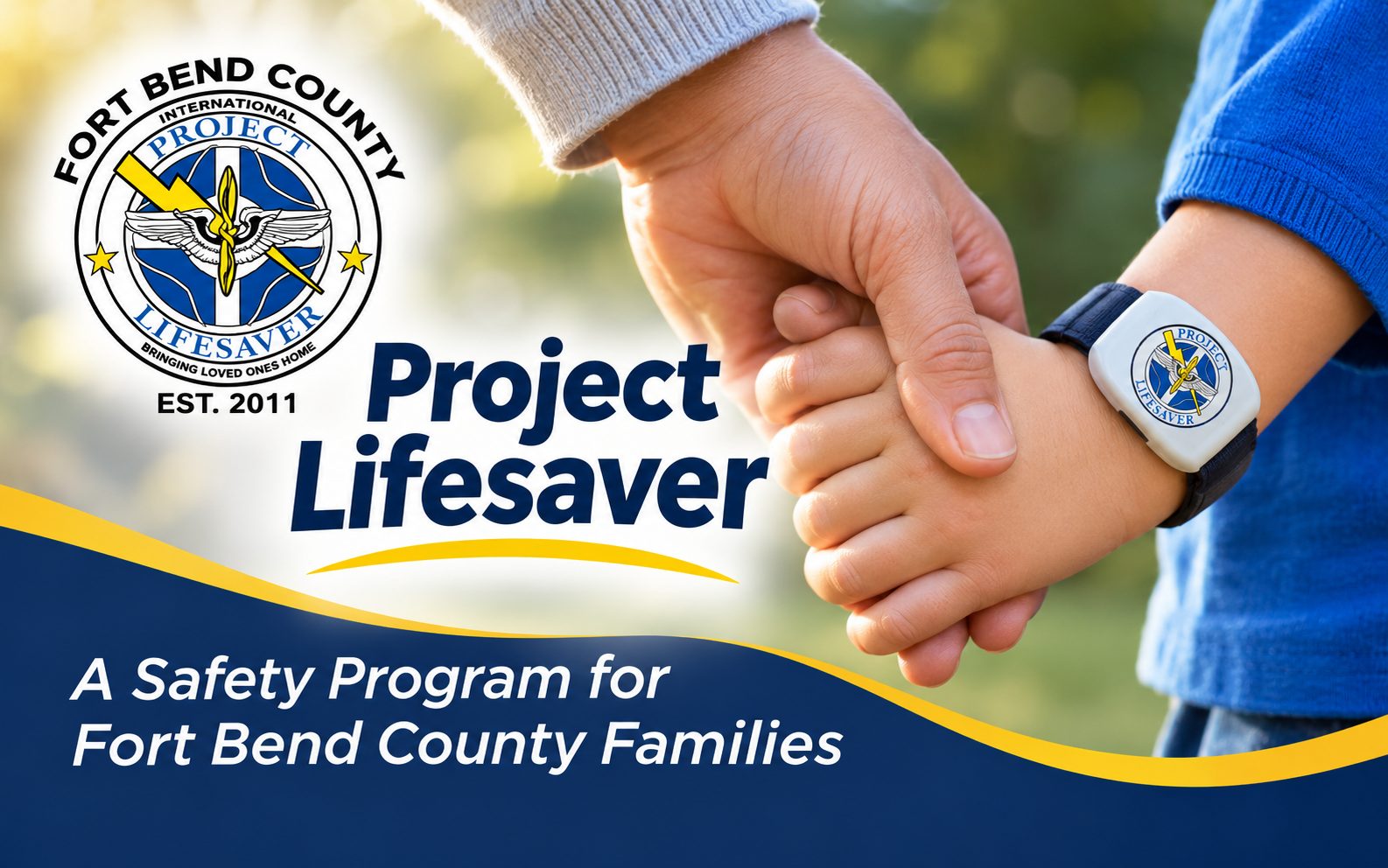
When a Loved One May Wander: Fort Bend County Project Lifesaver Offers Help to Lakemont Families
For families caring for a child with autism or an aging parent with dementia, the possibility of a loved one wandering away from home can be a constant concern. An unlocked door, a change in routine or a moment of confusion can quickly become an emergency. For caregivers in Lakemont, knowing what resources are available before something happens can make a meaningful difference.
One resource that Fort Bend County families may not know about is Project Lifesaver, a free program offered through the Fort Bend County Sheriff's Office that helps law enforcement locate individuals with cognitive conditions who are prone to wandering.
The program uses a small wearable radio transmitter and specialized tracking equipment operated by trained deputies. For parents, grandparents and other caregivers who worry about a loved one leaving a safe environment and being unable to find their way back, Project Lifesaver provides another layer of protection and a way to prepare before an emergency occurs.
How Does Fort Bend County's Project Lifesaver Program Work?
Project Lifesaver is a partnership between the Fort Bend County Sheriff's Office and Project Lifesaver International, a nonprofit organization established in 1999 to help locate individuals with cognitive conditions who wander from safe environments.
Eligible participants wear a small bracelet equipped with a radio-frequency transmitter. If the individual goes missing, trained deputies can use specialized receivers to detect the transmitter's signal and help locate the person.
Unlike GPS tracking devices, the radio-frequency bracelet does not provide caregivers with a live location on their phones. Instead, it gives responding law enforcement officers an additional tool to use during a search.
Project Lifesaver International also provides specialized training to first responders, helping them better understand cognitive conditions and approach missing individuals in ways that support their safety and well-being.
The distinction matters because someone living with Alzheimer's disease or another cognitive condition may become disoriented in familiar surroundings, while a child with autism who wanders may have difficulty communicating their name, address or need for help.
Although Project Lifesaver cannot prevent someone from wandering or guarantee a successful recovery, it can provide valuable assistance when every minute matters.
Who Qualifies for Project Lifesaver in Fort Bend County?
According to the Fort Bend County Sheriff's Office, the program is intended for individuals who have a history of wandering or may be at risk of wandering because of a cognitive disorder.
The Sheriff's Office identifies three primary eligibility requirements. Participants must live within Fort Bend County, have a diagnosed cognitive disorder and not be permitted to drive an automobile of any kind at any time.
Qualifying conditions may include autism spectrum disorder, Alzheimer's disease, dementia, intellectual and developmental disabilities, traumatic brain injury and other cognitive conditions.
Importantly, families do not necessarily need to wait until a loved one has already wandered away. The Sheriff's Office specifically includes individuals who may be prone to wandering and encourages caregivers to submit an application even when they are unsure whether someone meets the criteria.
For Lakemont households caring for children with special needs or older relatives experiencing memory loss, that makes the program worth exploring as part of a broader family safety plan.
How to Apply for Fort Bend County Project Lifesaver
The application process begins through the Fort Bend County Sheriff's Office website.
Caregivers can visit the county's official Project Lifesaver application page and submit an application on behalf of their loved one.
After the application has been reviewed, a Project Lifesaver coordinator will contact the applicant to explain the next steps and determine whether the individual meets the program's requirements.
The Sheriff's Office program has been described as a free resource for Fort Bend County residents. Families should confirm current equipment availability, enrollment procedures and any associated expenses with the coordinator.
For general assistance, the Fort Bend County Sheriff's Office can be reached at 281-342-3411.
Five Questions Caregivers Should Ask Before Enrolling
Families considering Project Lifesaver may find it helpful to discuss the practical details with the program coordinator before enrollment.
-
What information or documentation is needed? Ask whether medical records, a physician's diagnosis, proof of residency or caregiver authorization will be required.
-
How is the bracelet maintained? Project Lifesaver International uses transmitters with 30-day or 60-day battery replacement schedules and recommends daily battery checks. Ask which equipment Fort Bend County currently provides and what caregivers must do to keep it functioning properly.
-
What happens if the participant removes or cannot tolerate the bracelet? This may be particularly important for children with autism who have sensory sensitivities. Ask about available band sizes, materials and replacement procedures.
-
What should the family do if the person goes missing? Confirm the emergency reporting process, what information dispatchers will need and how responding officers will know that the missing person is enrolled in Project Lifesaver.
-
Does the program work outside Fort Bend County? Families who regularly travel, visit relatives or spend time in neighboring counties should ask how coverage and coordination with other law enforcement agencies work.
These conversations can help caregivers understand both the program's capabilities and their own responsibilities.

Why Wandering Prevention Matters for Families Caring for Someone With Dementia or Autism
The need for wandering prevention is especially important for families caring for individuals who may not recognize danger or communicate effectively when they become lost.
According to the Alzheimer's Association, six in 10 people living with dementia will wander at least once, and many experience repeated episodes. Wandering can happen at any stage of the disease, including when someone is still able to participate in familiar daily activities.
Warning signs may include repeatedly asking to go home while already at home, becoming confused in familiar places, returning late from a routine outing or appearing restless and determined to leave.
For families of children with autism, wandering, sometimes referred to as elopement, can create different challenges. A child may leave home, school or another supervised setting unexpectedly, and some children may be drawn toward water, traffic or other hazards.
Autism Speaks recommends that families develop individualized safety plans involving caregivers, schools, neighbors and other trusted people who regularly interact with the child.
Project Lifesaver can complement these precautions, but it is not a replacement for supervision, household safety measures or an emergency response plan.
What Families Can Do Now to Help Prevent a Wandering Emergency
Whether or not a loved one qualifies for Project Lifesaver, there are practical steps families can take to reduce risks and prepare for an emergency.
The Alzheimer's Association recommends keeping a recent photograph available, identifying places a person might be drawn to and informing trusted neighbors or relatives who could help if someone goes missing.
Families may also consider door alerts, monitoring devices and other appropriate home safety measures, particularly when a loved one has previously attempted to leave without assistance.
For children with autism, an emergency plan should also account for school routines, communication needs and situations in which the child might become overwhelmed or leave a supervised area.
If an enrolled Project Lifesaver participant goes missing, caregivers should call 911 immediately, explain the individual's cognitive condition, inform dispatchers that the person is enrolled in Project Lifesaver and share the last known location. They should not delay emergency reporting while attempting an extended search on their own.
Having a recent photograph, physical description, communication information and details about likely destinations readily available can also help first responders.
A Community Resource Worth Knowing About Before It Is Needed
For families in Lakemont, caring for a loved one who may wander often means thinking ahead in ways that others may not realize. It can mean checking doors before bedtime, making sure another family member is nearby during an errand or wondering whether a familiar neighborhood route could suddenly become confusing.
Project Lifesaver does not eliminate those concerns, but it offers an additional resource for families planning how to keep a vulnerable loved one safe.
Residents who care for someone with autism, Alzheimer's disease, dementia or another qualifying cognitive condition can review the Fort Bend County Sheriff's Office Project Lifesaver program and begin the application process before a wandering emergency occurs.
Even for residents who do not have someone in their immediate household who needs the program, sharing this information with a neighbor, friend or extended family member could help another Fort Bend County family discover a resource they did not know existed.
Stay connected with My Neighborhood News for more Fort Bend County community resources, family safety information and local programs that help residents care for the people who matter most.

 Tiffany Krenek has been on the My Neighborhood News team since August 2021. She is passionate about curating and sharing content that enriches the lives of our readers in a personal, meaningful way. A loving mother and wife, Tiffany and her family live in the West Houston/Cypress region.

Local business spotlight
Grow your business
where trust already lives.
Let’s introduce your business to the neighbors nearby.
Have a local favorite?
Let’s make an introduction.
Leave your email and our team will reach out with ways to promote your business.
Give a local favorite a little love.
Know a business your neighbors should discover? Tell us who they are.
We couldn’t send that just yet. Please try again.