







Thanksgiving Cooking, Christmas Lights and Cold Nights: Are the Smoke Alarms in Your Eagle Landing Home Ready?
Between preparing Thanksgiving dinner, pulling Christmas decorations out of storage and getting the house ready for visiting family, homeowners have plenty on their minds this time of year. But there's one important household task that deserves a spot on everyone's holiday to-do list: making sure the smoke alarms are working.
For families in Eagle Landing, the weeks leading into Thanksgiving and Christmas are a particularly good time to take a closer look at home fire safety. Busy kitchens, heating systems running on cooler nights, outdoor Christmas lights, indoor holiday decorations and candles can all introduce fire hazards that aren't part of the usual household routine.
According to the National Fire Protection Association (NFPA), working smoke alarms reduce the risk of dying in a home fire by approximately 60% compared with homes without working alarms. With modern furnishings and household materials allowing fires to spread more quickly than in decades past, those early warnings can give families valuable time to get outside safely.
Why Smoke Alarms Matter Even More During the Holidays
Thanksgiving is the leading day of the year for home cooking fires in the United States, followed by Christmas Day and Christmas Eve, according to the NFPA.
In a November 12, 2026, update, the organization reported that cooking equipment was involved in approximately 48% of reported U.S. home fires annually from 2020 through 2024. Unattended cooking remains a leading contributing factor.
That's easy to understand when several dishes are cooking at once, guests are arriving and children are moving in and out of the kitchen.
But cooking isn't the only concern. As temperatures drop across the Greater Houston area, households may begin using fireplaces, furnaces and portable space heaters. At the same time, electrical demand can increase as families plug in Christmas trees, outdoor lighting displays and other holiday decorations.
Properly installed and maintained smoke alarms provide an important layer of protection when something goes wrong, particularly overnight when family members are sleeping.
Where Should Smoke Alarms Be Installed in Your Home?
One of the most common misconceptions about smoke alarms is that having one or two in the hallway is enough.
According to NFPA 72, National Fire Alarm and Signaling Code, homes should have smoke alarms installed:
-
Inside every bedroom and sleeping room.
-
Outside each separate sleeping area, including nearby hallways.
-
On every level of the home, including basements.
-
In additional locations when needed for larger homes.
For homes with multiple stories, that means more than simply installing an alarm upstairs and another downstairs.
On floors without bedrooms, the NFPA recommends smoke alarms in a living room, den or family room, near the stairway leading upstairs, or in both locations. Basement alarms should be installed on the ceiling near the bottom of the stairs leading to the next level.
Placement matters, too.
Smoke alarms should be mounted on ceilings or high on walls because smoke rises. Wall-mounted alarms should be positioned no more than 12 inches below the ceiling, measured to the top of the alarm.
For pitched ceilings, alarms should be installed within three feet of the peak, but at least four inches below the highest point.
To reduce nuisance alarms from everyday cooking, smoke alarms should generally be placed at least 10 feet from cooking appliances. They should also be kept away from windows, doors and air ducts where drafts could interfere with detection.
Homeowners should never paint over smoke alarms or cover them with stickers or decorations that could affect their operation.
Older homes deserve special attention. Some houses built under earlier standards may not have enough smoke alarms to meet current recommendations, even if the original installation complied with requirements at the time.

When Was the Last Time You Tested Your Smoke Alarms?
For homeowners in Eagle Landing, one of the simplest holiday safety precautions takes only a few minutes.
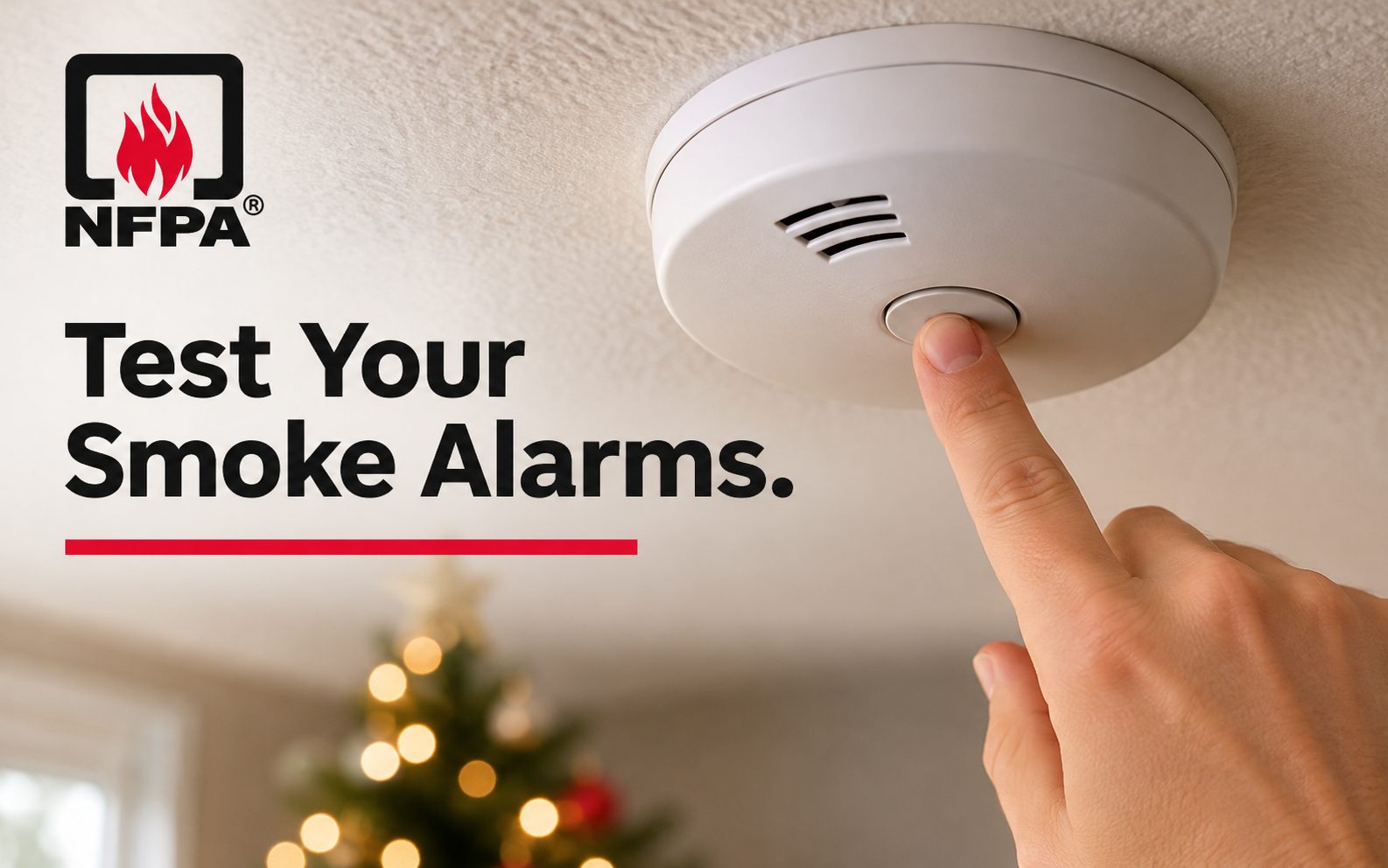
The NFPA recommends testing every smoke alarm at least once a month by pressing its test button and following the manufacturer's maintenance instructions.
Homeowners should also check the age of each alarm. Smoke alarms generally need to be replaced 10 years after their manufacturing date, even if they still sound when tested.
Battery maintenance depends on the type of alarm:
-
Smoke alarms with replaceable batteries: Batteries should be replaced at least annually or immediately when a low-battery warning chirp begins. Use only the battery types approved by the manufacturer.
-
Smoke alarms with sealed, non-replaceable 10-year batteries: These units are designed to operate for up to 10 years. If a low-battery warning occurs, the entire alarm must be replaced.
-
Hardwired smoke alarms: These also require testing, proper maintenance and eventual replacement. Homeowners should follow manufacturer instructions and use a qualified electrician for hardwired installation or electrical work.
Alarms should also be cleaned according to manufacturer recommendations to prevent dust and debris from affecting performance.
The NFPA recommends interconnected smoke alarms, meaning that when one alarm detects smoke, every connected alarm sounds. Interconnection can be accomplished through compatible hardwired or wireless systems.
This can be especially important in larger or two-story homes, where a fire starting downstairs might otherwise go unnoticed by someone sleeping upstairs.
An earlier U.S. Consumer Product Safety Commission household survey cited by NFPA found interconnected smoke alarms sounded in 53% of surveyed household fires and alerted occupants in 26%. In homes with alarms on all floors, alarms sounded in 37% of fires and alerted occupants in 15%. Where alarms were not present on every floor, those figures dropped to 4% and 2%. These categories were not controlled head-to-head comparisons, but the findings reinforce the importance of adequate coverage.
When installing interconnected alarms, homeowners should confirm that the models are compatible, typically using products from the same manufacturer.
There are also different smoke-sensing technologies to consider. Ionization alarms generally respond more quickly to flaming fires, while photoelectric alarms are generally more responsive to smoldering fires. Using both technologies or combination dual-sensor alarms can provide broader detection.
Whatever type is selected, homeowners should choose products bearing the label of a recognized testing laboratory.
Holiday Cooking, Home Heating and Christmas Lights: Fire Hazards Worth Checking
Even with properly functioning smoke alarms, prevention remains the first line of defense. Several everyday holiday activities deserve extra attention.
Thanksgiving and Christmas Cooking
Holiday meals often involve multiple burners, a full oven and plenty of activity around the stove.
The NFPA recommends staying in the kitchen while cooking on the stovetop and remaining at home while a turkey or other food is roasting. Timers can help prevent dishes from being forgotten.
Keep oven mitts, dish towels, food packaging and other combustible materials at least three feet from cooking equipment. Children and pets should also remain at least three feet away from stoves and areas where hot food is prepared.
For a small grease fire in a pan, the NFPA recommends sliding a lid over the pan and turning off the burner if it can be done safely. Never pour water onto a grease fire.
The organization also strongly discourages using oil-filled turkey fryers because of their burn and fire hazards.
Space Heaters, Fireplaces and Home Heating
While Greater Houston winters are generally milder than those in northern states, cold fronts can bring a sudden need for extra heat.
Before running heating equipment, homeowners should make sure it is in good working condition. Heating systems and chimneys should be inspected and cleaned annually by a qualified professional.
Portable space heaters should be kept at least three feet away from curtains, bedding, furniture and anything else that can burn. Place them on stable, level surfaces and plug them directly into wall outlets, never extension cords or power strips.
Turn portable heaters off and unplug them before leaving the room or going to bed.
Homes with fuel-burning appliances, fireplaces or attached garages should also have properly installed carbon monoxide alarms. Unlike smoke alarms, these devices detect carbon monoxide, an invisible and potentially deadly gas.
Outdoor and Indoor Christmas Lights
Whether it's a few strands around the front porch or an elaborate neighborhood Christmas display, holiday lighting should be inspected before installation.
Use only lights rated for the intended location. Indoor lights aren't necessarily safe for outdoor exposure.
Replace light strings with damaged cords, loose connections or broken bulbs. Follow manufacturer instructions for how many strands can safely be connected, and avoid overloading electrical outlets.
Use appropriate clips instead of nails or staples that could damage wiring, and keep electrical cords out of doorways and from beneath rugs.
Before going to bed or leaving home, turn off holiday light strings and electrical decorations.
Christmas Trees, Candles and Decorations
For households choosing a real Christmas tree, keeping it watered daily is an important fire prevention measure.
Trees should be placed at least three feet from fireplaces, space heaters, heat vents and other heat sources. They should never obstruct an exit.
Candles also deserve attention, especially when surrounded by greenery, table decorations or seasonal arrangements. Keep lit candles away from anything flammable, children and pets, and extinguish them before leaving a room or going to sleep.
Battery-operated flameless candles can provide a similar holiday atmosphere without an open flame.
Choosing flame-resistant decorations and keeping hallways and doorways clear adds another layer of protection.
Does Everyone in Your Family Know What to Do If a Smoke Alarm Sounds?
Working smoke alarms are most effective when everyone in the household understands what they mean and how to respond.
The NFPA encourages families to develop and practice a home fire escape plan that identifies two possible ways out of each room, when available, and a designated outdoor meeting place.
Parents can walk through the plan with children before holiday visitors arrive. Families should also consider older relatives, people with mobility limitations and anyone who may need assistance escaping.
For people who are deaf or hard of hearing, specialized smoke alarm systems with flashing lights or bed-shaking alert devices may provide necessary warning.
If a smoke alarm sounds because of a fire, everyone should leave immediately, call 911 from outside and remain outside. No one should reenter the home until emergency responders say it is safe.
A Small Holiday Safety Check That Could Make a Big Difference
As holiday preparations get underway in Eagle Landing, checking smoke alarms is one task that shouldn't get lost between grocery shopping, decorating and coordinating family gatherings.
Before the next round of holiday cooking or the first chilly evening that calls for turning on the heat, homeowners can walk through the house, test each alarm, check manufacturing dates, inspect batteries and confirm that every bedroom, sleeping area and floor has appropriate coverage.
The NFPA provides additional information through its smoke alarm installation and maintenance resources, including an installation guide for understanding proper placement and household safety needs.
It's also worth checking on an older neighbor or family member who may need help testing or replacing an alarm. A simple conversation about fire safety can be a meaningful way to look out for one another this season.
The holidays are meant for gathering around the table, enjoying traditions and spending time with the people who matter most. Taking a few minutes to make sure smoke alarms are ready is one practical way to help keep those moments safe.
Stay connected with My Neighborhood News for more seasonal home safety tips, neighborhood updates and practical information to help protect the people and places that make our communities home.

 Tiffany Krenek has been on the My Neighborhood News team since August 2021. She is passionate about curating and sharing content that enriches the lives of our readers in a personal, meaningful way. A loving mother and wife, Tiffany and her family live in the West Houston/Cypress region.

Local business spotlight
Grow your business
where trust already lives.
Let’s introduce your business to the neighbors nearby.
Have a local favorite?
Let’s make an introduction.
Leave your email and our team will reach out with ways to promote your business.
Give a local favorite a little love.
Know a business your neighbors should discover? Tell us who they are.
We couldn’t send that just yet. Please try again.