







From a Grim Prostate Cancer Prognosis to Remission: Houston-Area Survivor Turns Treatment Journey Into Hope for Others
For Barry Chautin, a routine doctor’s visit became the beginning of a cancer journey that would bring frightening news, an unexpected turn in his diagnosis and, ultimately, a chance to give hope back to other patients walking hospital hallways much like he did.
The 66-year-old Houston-area prostate cancer survivor was initially told he may have only six to 12 months to live after testing appeared to show a rare and aggressive form of stage 4 prostate cancer.
Today, Chautin is in remission.
And during Prostate Cancer Awareness Month this September, his experience is carrying a message well beyond his own recovery: pay attention to changes in your health, talk with your doctor about prostate cancer screening and do not assume cancer treatment has to take away every source of comfort or purpose along the way.
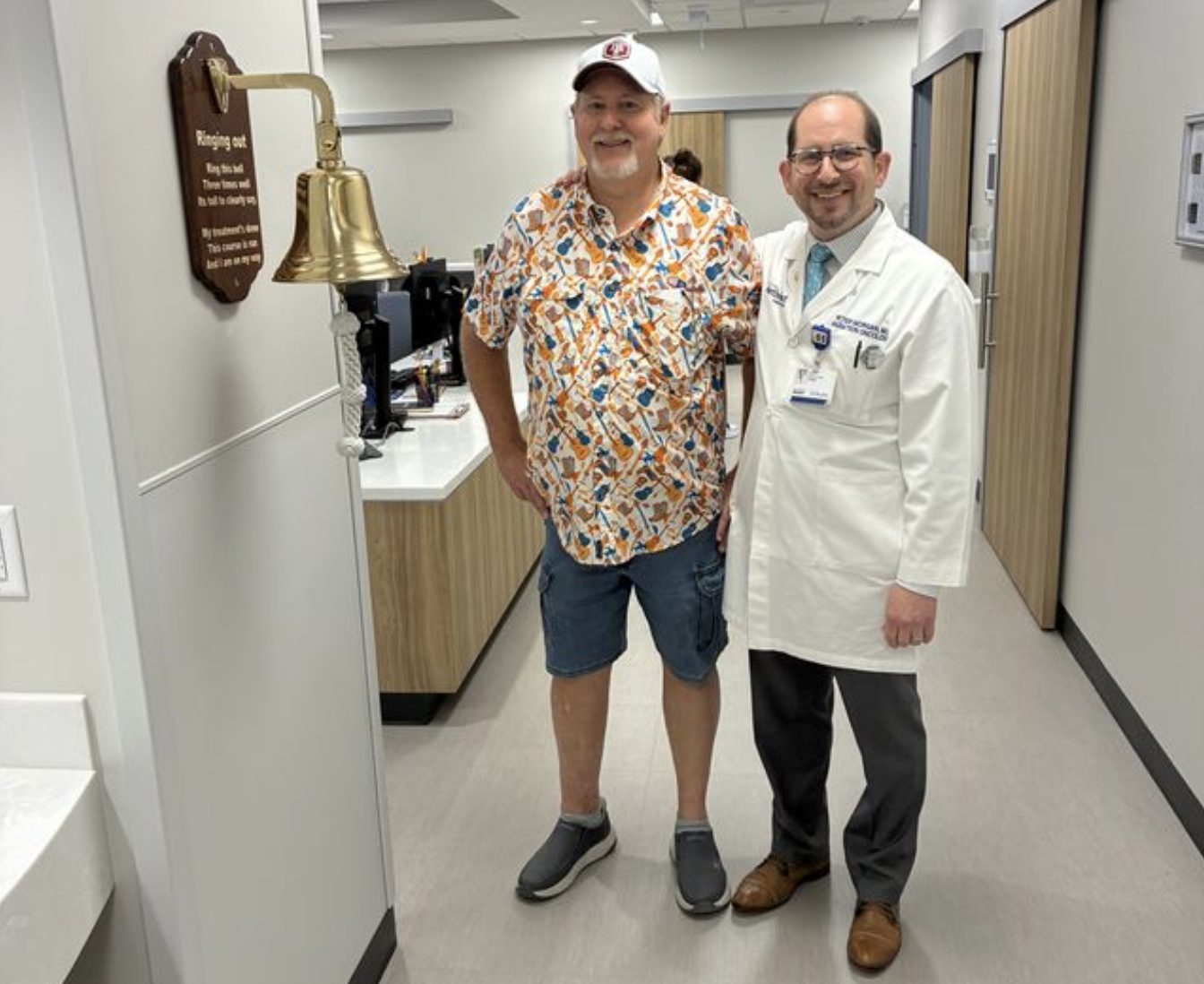
For Chautin, that purpose came through woodworking. While undergoing treatment, he began creating custom wooden plaques for chemotherapy and radiation celebration bells at Houston Methodist Cypress Hospital. Eventually, after finishing his own treatment, Chautin stood beside one of those bells and rang a symbol of hope he had helped create himself.
A Routine Doctor’s Visit Leads to an Urgent Prostate Cancer Evaluation
Chautin’s path to treatment began in April 2025 during a routine visit with his primary care physician.
His prostate-specific antigen, or PSA, level had risen significantly compared with the year before, and he was also unable to urinate. Those findings prompted an urgent referral to Dr. Zachary Mucher, a urologist at Houston Methodist Sugar Land Hospital.
The initial results were devastating.
Testing suggested Chautin had stage 4 prostate cancer with small cell differentiation, a rare and particularly aggressive subtype of prostate cancer.
“The cancer appeared metastatic and had spread,” Mucher said. “Most patients with this subtype of prostate cancer typically have just six to 12 months to live. It was also extremely out of the ordinary because most prostate cancers do not cause any symptoms.”
The diagnosis hit particularly close to home for the medical team. Chautin’s daughter is one of Houston Methodist’s nurse practitioners.
“It was a really hard day for all of us because Mr. Chautin’s daughter is one of our nurse practitioners, and we were all heartbroken,” Mucher said.
What happened next illustrates why additional testing and collaboration among cancer specialists can be so important, particularly when physicians are dealing with a complex or unusual prostate cancer diagnosis.

Houston Methodist Team Builds a Multidisciplinary Cancer Treatment Plan
Mucher referred Chautin’s case to Dr. Patrick Prath, a medical oncologist at Houston Methodist Sugar Land, and Dr. Clive Shkedy, a radiation oncologist at Houston Methodist Sugar Land.
Together, the physicians developed a comprehensive treatment strategy that included chemotherapy, hormone therapy, surgery and radiation.
Chautin was also able to receive treatment closer to home at Houston Methodist Cypress Hospital under the care of radiation oncologist Dr. Peter Morgan. That arrangement reduced the amount of travel required during an already demanding period while allowing his treatment plan to continue across the Houston Methodist system.
“The staff explained everything, treated me with kindness and were always checking on me – they truly went above and beyond,” Chautin said.
Then came an important change.
During surgery intended to remove cancer cells and help restore normal bladder function, doctors collected additional tissue for testing. The resulting biopsy showed that Chautin did not have the small-cell cancer initially suspected.
Instead, physicians determined he had a more typical high-grade prostate carcinoma with neuroendocrine features. The cancer was classified as stage 3 and had spread to nearby lymph nodes.
It remained a serious diagnosis, but the distinction changed the outlook considerably.
“This is still a serious diagnosis, but it carries a higher chance of achieving remission compared to a small-cell cancer,” Prath said.
Woodworking Becomes Part of the Healing Process at Houston Methodist Cypress
Cancer treatment can quickly become measured in appointments, lab results, medications and procedures.
For Chautin, woodworking provided something different.
While receiving cancer treatment, he began handcrafting custom wooden plaques featuring inspirational poems for Houston Methodist Cypress Hospital’s celebration bells — the bells patients traditionally ring to mark significant milestones such as completing chemotherapy or radiation.
The project became more than a way to pass the time.
Those plaques would remain at the hospital for patients Chautin might never meet, marking moments of relief and accomplishment for families who understood firsthand what it meant to make it through another difficult stretch of cancer treatment.
That made the ending of his own treatment especially meaningful.
Chautin responded well to the combination of treatments, and his most recent PSA test in May 2026 showed no detectable evidence of cancer. He was ultimately able to ring the same celebration bells he had helped transform through his woodworking.
A project created while he was still undergoing treatment had become part of his own remission story.
Prostate Cancer Awareness Month Brings a Message for Men and Families
Chautin is now using Prostate Cancer Awareness Month to encourage other men not to postpone conversations about their health.
“I tell all my friends to get checked,” he said. “I met people during treatment who were much younger than I was, and it really opened my eyes. Stay positive and trust your care team.”
According to the American Cancer Society information provided by Houston Methodist, prostate cancer is the most common cancer among men and the second-leading cause of cancer death among American men.
Nearly 1 in 8 men will be diagnosed with prostate cancer during their lifetime.
Risk is not the same for everyone. Black men face a higher risk of both prostate cancer diagnosis and death compared with other racial groups, while having a father or brother with prostate cancer more than doubles a man’s risk of developing the disease.
Those factors make discussions about individual risk and appropriate prostate cancer screening especially important for men with a family history or other elevated risk factors.

What Prostate Cancer Symptoms Should Men Watch For?
Many prostate cancers produce few or no symptoms, particularly in their earlier stages, which is one reason routine medical care and conversations about PSA testing can matter.
Houston Methodist oncologists encourage men experiencing certain urinary changes to contact a physician or urologist. Those warning signs can include difficulty starting or stopping urination, a weak or interrupted urine stream, painful urination or unusually frequent urination.
The presence of those symptoms does not necessarily mean a person has prostate cancer, but persistent urinary changes warrant medical evaluation rather than being ignored.
Chautin’s experience is an example of how quickly an ordinary medical appointment can become something far more consequential. His elevated PSA and urinary problems set in motion the additional testing that eventually clarified both his diagnosis and his treatment options.
It is also a reminder that an initial cancer diagnosis may not always be the final word. Pathology, imaging, surgery and multidisciplinary review can provide physicians with additional information that helps determine exactly what type of cancer they are treating.
A Celebration Bell With a Story Behind It
For many patients walking into Houston Methodist Cypress Hospital for cancer care, the celebration bell is something they hope to reach someday.
Those who see Chautin’s handmade plaques may never know every detail of the man who crafted them.
But their presence carries a story of its own.
A patient who once heard that he might have less than a year to live found himself creating something for the people coming after him. Then, after months of chemotherapy, hormone therapy, surgery and radiation, he became one of the patients who got to ring it.
During Prostate Cancer Awareness Month, Chautin’s experience brings the statistics surrounding prostate cancer back to something much more personal: fathers, brothers, husbands, friends and neighbors who may benefit from asking one more question at their next doctor’s appointment.
For Houston-area families, his story also offers another reminder — early attention to changing health conditions, appropriate screening conversations and coordinated specialty care can make a meaningful difference when prostate cancer is suspected or diagnosed.
Stay tuned to My Neighborhood News for more local health stories, community resources and information affecting families across the Houston area.

 Tiffany Krenek has been on the My Neighborhood News team since August 2021. She is passionate about curating and sharing content that enriches the lives of our readers in a personal, meaningful way. A loving mother and wife, Tiffany and her family live in the West Houston/Cypress region.
Do you own a business?