






Houston Already Has Robotaxis. What Uber’s New Expansion Could Mean for Katy, Cypress and Other Suburbs
If you've spotted headlines about robotaxis coming to Houston, here's something that may surprise you: they're already here.
As of 2026, Houston has become one of the nation's growing hubs for autonomous transportation, with both Waymo and Tesla operating commercial robotaxi services in select parts of the region.
Now, another major player is preparing to enter the market.
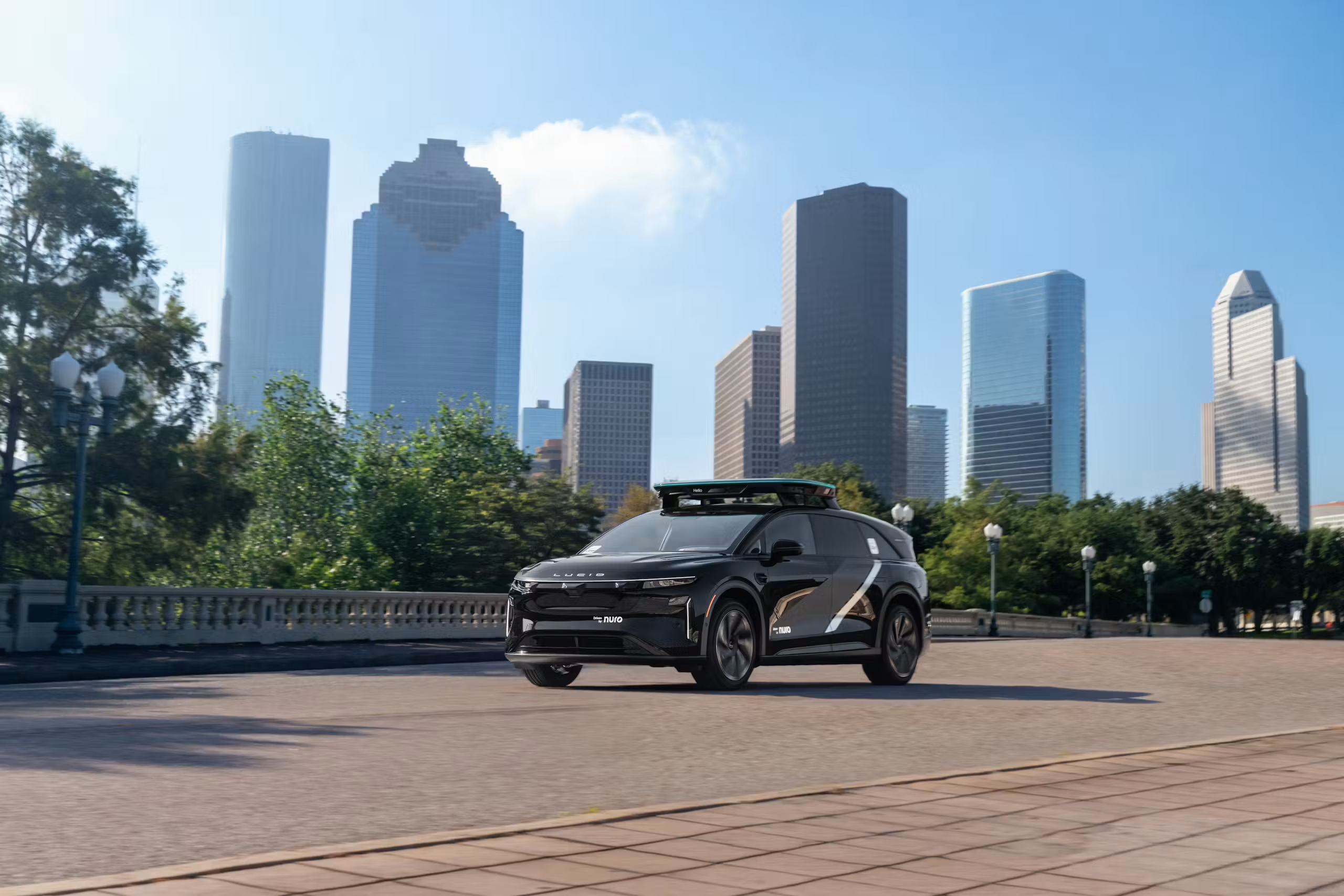
Uber, Nuro, and Lucid recently announced plans to launch their own robotaxi service in Houston in 2027, adding a third autonomous ride-hailing option to a city that is quickly emerging as a testing ground for the future of transportation.
For residents in communities like Katy, Cypress, Tomball, Spring, Fulshear, Richmond, and Rosenberg, the bigger question may not be whether robotaxis are coming to Houston—but whether they're eventually coming closer to home.
Houston's Robotaxi Market Is Already Taking Shape
Houston is no longer simply testing autonomous vehicles on public roads.
Waymo launched public driverless rides in Houston in February 2026 and has since expanded service across portions of central Houston, including areas around Downtown, Montrose, The Heights, the Texas Medical Center, EaDo, and NRG Stadium.
Tesla followed in April 2026 with its own robotaxi service operating in a geofenced area of northwest Harris County, including portions of Jersey Village and Willowbrook. While Tesla's Houston footprint remains smaller than Waymo's, the launch marked another significant step in the city's autonomous vehicle evolution.
Despite those advancements, robotaxi availability remains limited to specific operating zones rather than the entire metropolitan area.
That reality helps explain why Uber's latest announcement could be particularly important for suburban residents.

Could Houston's Suburbs Be Next?
Uber's new partnership combines Nuro's autonomous driving technology with Lucid's electric vehicles and Uber's ride-hailing platform.
The companies have not announced where their Houston service will launch when operations begin in 2027. However, officials repeatedly emphasized Houston's size, trip diversity, and sprawling metropolitan footprint as key reasons for selecting the region.
Nuro Chief Operating Officer Andrew Chapin described Houston as a "large, complex metro area" that offers a wide range of driving environments.
For suburban communities, that language stands out.
Unlike many major cities where population and employment are concentrated in an urban core, much of Greater Houston's growth has occurred in suburban communities. Areas such as Katy, Cypress, Tomball, Spring, and Fulshear generate thousands of daily trips to schools, medical facilities, shopping centers, restaurants, office parks, and entertainment destinations.
Those travel patterns represent the type of real-world demand that autonomous vehicle companies ultimately hope to serve.
Testing Is Already Underway
While commercial service remains about a year away, Nuro is already conducting autonomous vehicle testing on Houston roads with trained safety operators.
The company has maintained a Houston presence since 2019 and previously conducted Level 4 autonomous operations on public roads in the city.
Uber also announced it has secured a 50,000-square-foot Houston depot and charging facility that will support fleet maintenance, cleaning, repairs, and charging operations for the future robotaxi fleet.
The investment signals that Houston is expected to play a significant role in Uber's long-term autonomous transportation strategy.

The Future May Extend Beyond Downtown
If Waymo and Tesla have demonstrated anything so far, it's that robotaxi services typically begin within carefully defined operating areas before expanding outward.
That means Katy, Cypress, Tomball, Spring, and other suburban communities are unlikely to see immediate widespread robotaxi coverage when Uber launches in 2027.
However, Houston's suburban development pattern may ultimately make expansion beyond the urban core difficult to ignore.
For now, autonomous transportation remains limited to select areas of the city. But with three major robotaxi operators either actively serving Houston or preparing to launch, driverless rides are becoming an increasingly visible part of the region's transportation landscape.
Whether the next phase reaches master-planned communities and suburban commercial corridors remains to be seen—but the conversation is no longer about if robotaxis will operate in Houston. It's about how far their reach will eventually extend.
Stay tuned with My Neighborhood News for updates on autonomous vehicle expansion, transportation technology, and developments affecting communities across Greater Houston.

 Tiffany Krenek has been on the My Neighborhood News team since August 2021. She is passionate about curating and sharing content that enriches the lives of our readers in a personal, meaningful way. A loving mother and wife, Tiffany and her family live in the West Houston/Cypress region.
Local business spotlight
Grow your business
where trust already lives.
Let’s introduce your business to the neighbors nearby.
Have a local favorite?
Let’s make an introduction.
Leave your email and our team will reach out with ways to promote your business.
Give a local favorite a little love.
Know a business your neighbors should discover? Tell us who they are.
We couldn’t send that just yet. Please try again.