







Fulshear Pauses 150-Foot Cell Tower Proposal at Jordan High School, Seeks More Data and Alternatives
For residents around Jordan High School, the question before Fulshear City Council was bigger than whether the city needs better cell service.
Council members wanted to know whether a proposed 150-foot telecommunications tower at Jordan High School is the right tower, in the right place and at the right height — especially with homes nearby and several other recently approved cell sites still not fully operational.
By the end of a lengthy discussion that included questions about wireless coverage, network capacity, safety, tower locations and possible alternatives, council voted to postpone consideration of Ordinance No. 2026-1549 rather than approve the Specific Use Permit, or SUP, for the project.
That means the proposed tower at 27500 Fulshear Bend Drive has not been approved and is on hold while additional information and alternatives are reviewed.
What is proposed at Jordan High School?
Diamond Towers V, LLC submitted the application July 24 for a telecommunications facility on Katy ISD property at Jordan High School.
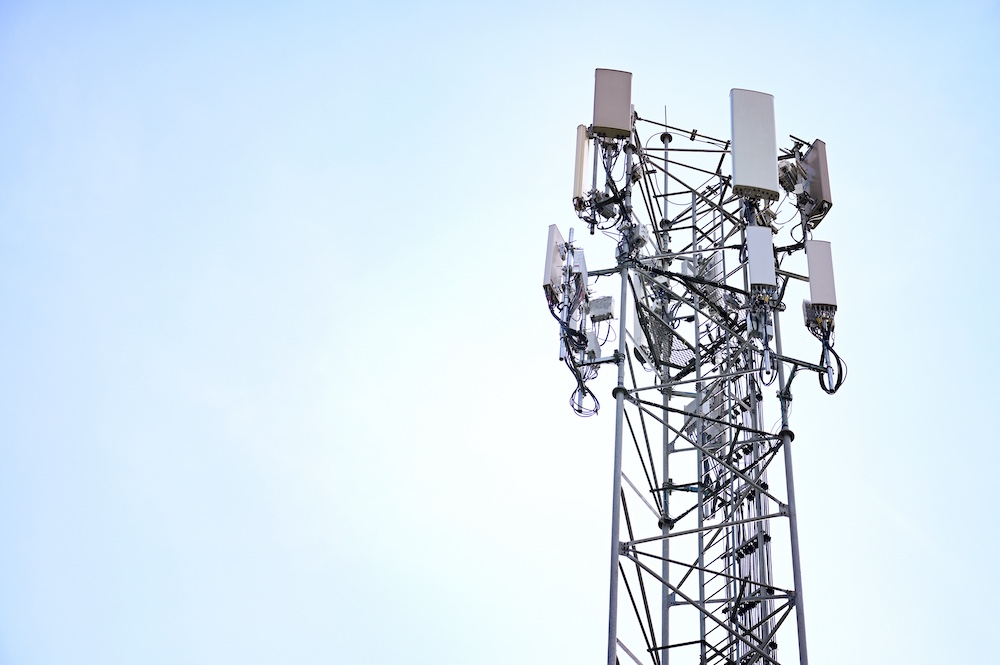
Plans included with the application identify a 150-foot monopole, reaching approximately 154 feet at its highest appurtenance, with space for one proposed wireless carrier and two future carriers. The plans also call for a monopole design without guy wires.
Diamond Communications representative Katie Harms told council that Verizon is the project's “anchor tenant,” meaning Verizon's interest is driving the initial site development. She said the tower is designed to accommodate additional carriers as well.
That became an important part of the discussion as council members questioned whether Fulshear should continue adding standalone towers without first understanding how much coverage and capacity already-approved facilities will provide once they are fully operational.
Council wants a broader picture of Fulshear's cell network
Cell service has been an ongoing concern as Fulshear and surrounding communities have grown, and city officials have approved multiple telecommunications sites in recent years.
In 2024, Fulshear adopted Ordinance No. 2024-1454, which the city's agenda materials say made cell towers a specific use in each zoning district, requiring individual projects to go through the Specific Use Permit process.
During the Jordan High School discussion, council members said six tower or antenna sites have been approved and three are currently operational. They also expressed frustration with the length of time some previously approved sites have taken to come online, with CenterPoint-related electrical service delays discussed as one factor.
That led to one of the night's central questions: What will Fulshear's actual coverage and network capacity look like once the sites already approved are fully operational?
Council members asked for a broader analysis showing existing towers, approved-but-not-yet-operational sites, known carriers and remaining coverage or capacity gaps.
Harms said Diamond could provide that type of analysis.
“We can do the whole city for you guys,” she told council.

Coverage and capacity became a key point of debate
Part of the discussion focused on the difference between having a signal and having enough network capacity to handle demand.
A location can technically have cellular coverage while still experiencing slow or unreliable service when many devices are trying to connect at the same time.
Harms presented Diamond's third-party signal-strength mapping, which she said showed unreliable Verizon service around portions of the Jordan High School area. She also said crowded school campuses can place significant demand on nearby wireless networks.
Council members, however, pointed to publicly available coverage and tower maps that appeared to show substantial service and several nearby facilities, including towers they said were within roughly a mile of the proposed site.
One council member questioned what another tower would solve if nearby sites are already present or still waiting to become fully operational.
Rather than resolve those competing pictures during the meeting, council asked for more comprehensive data that takes both existing and approved sites into account.
That distinction — between what current maps appear to show and what the area's real-world network capacity looks like — is likely to be one of the central issues when the proposal returns.
Residents' concerns push alternatives into the conversation
The technical questions were only part of the discussion.
Residents raised concerns about the proposed tower's height, visibility, proximity to homes, pedestrian areas and recreational facilities, along with possible safety issues. During the discussion, one council member referenced opposition from more than 100 residents.
The SUP application itself identifies the 71.9572-acre school property as being in Fulshear's Semi-Urban Residential zoning district and lists single-family uses on all four sides of the tract — north, south, east and west.
That helps put the neighborhood concerns into context.
Council members repeatedly made clear that the discussion was not simply about rejecting telecommunications infrastructure. Several acknowledged that service and capacity problems remain an issue in Fulshear.
Their focus instead turned to whether the same service goal could be achieved with less neighborhood impact.
Among the ideas discussed were relocating the equipment elsewhere on the Jordan High School campus, considering nearby city-owned property, reducing the proposed height and making greater use of existing elevated structures.
Harms cautioned that moving the tower farther south could shift coverage away from the area Diamond says needs additional service and could also place the facility closer to other residential properties.
Could a stadium light provide another option?
One of the most notable alternatives emerged late in the discussion.
Harms said Jordan High School already has 23 stadium lights and described an approach Diamond has used elsewhere in which a stadium-light structure is replaced with a purpose-built pole that continues to support the lighting while also accommodating wireless antennas above it.
Instead of constructing a separate 150-foot monopole, Harms suggested Diamond could explore replacing one of the approximately 80-foot stadium-light structures with a stronger structure that retains the lighting and extends high enough above it to support multiple wireless carriers.
She said approximately 10 feet of separation could be provided for each carrier, potentially adding about 30 feet above the existing lighting elevation.
The concept is preliminary and has not been approved or selected for Jordan High School. Engineering, carrier requirements, Katy ISD approval and city review would still need to be addressed.
But the idea drew interest from council members because it could potentially avoid adding a separate 150-foot structure.
Harms also said Diamond would consider returning to the carriers with a lower-height option if council determined 150 feet was too tall.
“If you guys tell me we're okay with this, but we don't want it to be over 100 feet, I'm happy to go back to the carriers,” she said.

Katy ISD's role could become more visible
The proposed facility would sit on Katy ISD property, not city-owned land.
Harms said Diamond works through a program with the Texas Association of School Boards called ConnectED and has an agreement involving five Katy ISD high schools. According to Harms, telecommunications leases through that program can provide revenue to participating school districts.
She said high school properties were selected because Katy ISD viewed their larger sites — and their separation from elementary schools — as better candidates for telecommunications facilities.
During the meeting, officials said Katy ISD had not held a separate public hearing or town hall on the proposed Jordan High School location and was not required to do so as part of this process.
Several council members said they would like the district more directly involved as Diamond explores whether another location on the Jordan campus could reduce concerns from nearby homeowners.
Harms also said Katy ISD could receive additional revenue as more wireless carriers co-locate on a tower.
What happens next for the Jordan High School cell tower?
For now, Ordinance No. 2026-1549 remains on hold.
Before council considers the proposal again, members requested a broader look at cellular coverage and capacity across Fulshear, including the effect of sites that have already been approved but are not yet operational.
They also asked for additional safety and engineering information, a closer look at alternative locations, lower-height options and potential partnerships involving Katy ISD and city-owned property.
Council members also want a clearer understanding of whether existing facilities can accommodate additional carriers before more standalone towers are approved.
The discussion suggests Fulshear may be moving toward a more comprehensive approach to telecommunications planning — one that looks not only at whether a particular site meets the city's technical requirements, but also at how each proposed tower fits into the city's broader wireless network.
For residents near Jordan High School, that means the immediate proposal is paused while the city, Katy ISD and Diamond Communications take a closer look at the need, the location and the available alternatives.
My Neighborhood News will continue following the Jordan High School cell tower proposal and report when it returns to Fulshear City Council.

 Tiffany Krenek has been on the My Neighborhood News team since August 2021. She is passionate about curating and sharing content that enriches the lives of our readers in a personal, meaningful way. A loving mother and wife, Tiffany and her family live in the West Houston/Cypress region.
Local business spotlight
Grow your business
where trust already lives.
Let’s introduce your business to the neighbors nearby.
Have a local favorite?
Let’s make an introduction.
Leave your email and our team will reach out with ways to promote your business.
Give a local favorite a little love.
Know a business your neighbors should discover? Tell us who they are.
We couldn’t send that just yet. Please try again.