







Fulshear Approves Long-Term Surface Water Agreement, Removes Need for $40 Million in Planned McKinnon Improvements
For a city adding homes, businesses and residents at a rapid pace, the question of where Fulshear’s water will come from decades from now has become increasingly important.
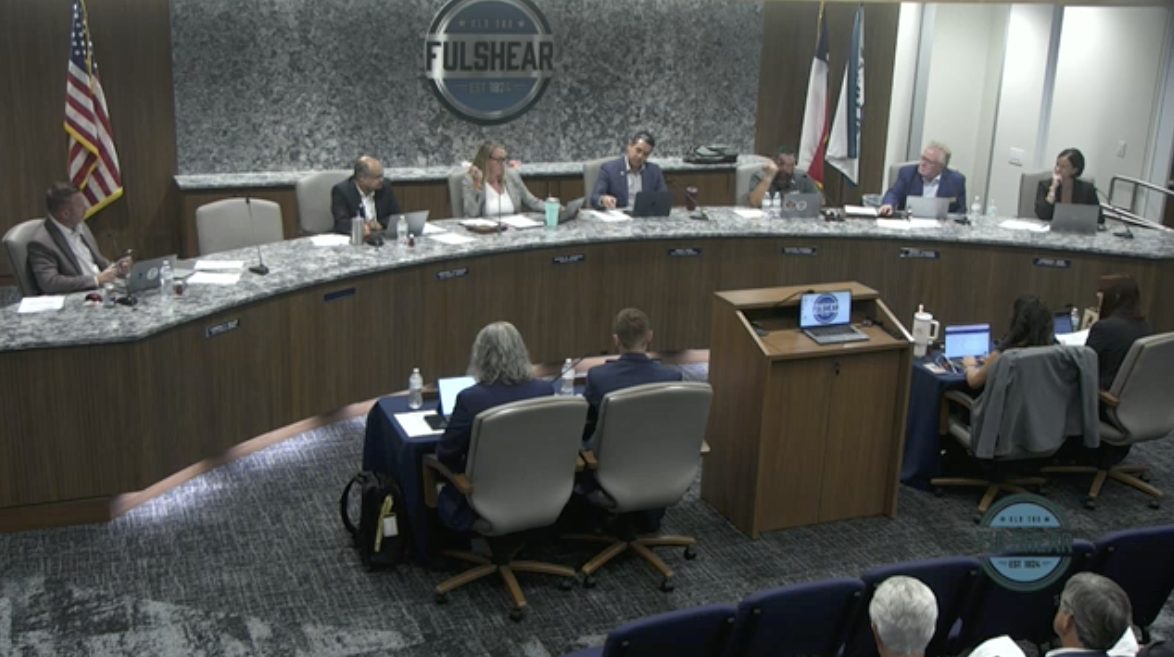
On Sept. 15, Fulshear City Council approved a water supply agreement with the North Fort Bend Water Authority that establishes a long-term minimum surface water commitment for the city.
The additional supply also makes approximately $40 million in previously planned improvements at the McKinnon Water Plant unnecessary, according to the city’s staff memo. This will allow Fulshear to reduce future utility bond needs or preserve that capital capacity for other priorities.
Under the agreement, the North Fort Bend Water Authority, or NFBWA, will make at least 1.4 million gallons of water per day available to Fulshear, calculated using a 30-day average.
The agreement has an initial 20-year term beginning upon execution by NFBWA. It will then renew automatically for successive three-year periods unless either party provides at least 180 days’ written notice of termination.
For residents, the bigger story is where that water will come from—and why Fulshear and other communities across northern Fort Bend County are working to reduce their reliance on groundwater.
Why Fulshear is moving toward more surface water
For generations, much of the Houston region has relied heavily on groundwater pumped from underground aquifers. Withdrawing large quantities of groundwater can contribute to land subsidence, or the gradual sinking of the ground as underground clay layers compact.
That is one reason the Texas Legislature created the North Fort Bend Water Authority in 2005. Its role includes helping water providers in northern Fort Bend County comply with groundwater-reduction requirements by securing and delivering alternative water supplies, primarily treated surface water.
Fulshear is among the communities within the authority’s boundaries.
NFBWA’s broader regional strategy is designed to reduce groundwater pumping and increase the use of surface water as communities grow and work to meet Fort Bend Subsidence District requirements.
Those concerns have become a recurring part of Fulshear’s infrastructure discussions as city leaders plan for continued residential and commercial development.
Councilmember Camron K. Miller, an active participant in the city’s Strategic Water/Wastewater Infrastructure Planning committee, described securing a reliable supply as one of the committee’s main objectives.
“I think this is, again, one of the main objectives, is to secure reliable and clean water for all residents in Fulshear, and this agreement will do that.”
Miller also said groundwater use should be considered as the city evaluates development and infrastructure plans.
“If we’re using groundwater and we shouldn’t be, we need to challenge the plan.”
Where Fulshear’s surface water will come from
The agreement is tied to a much larger regional water system being developed across the Houston area.
NFBWA purchases water from the City of Houston and is participating in major regional projects intended to carry more treated surface water into northern Fort Bend County. Those projects include the Northeast Water Purification Plant expansion and the Surface Water Supply Project.
For Fulshear, the agreement anticipates two delivery points.
Surface water delivery to the Fulshear Bend Water Plant may begin by Dec. 31, 2027, followed by the FM 1093 Water Plant by Dec. 31, 2028.
Those dates are anticipated targets, not guaranteed deadlines.
The agreement states that NFBWA will not be obligated to provide the city’s committed amount until the necessary regional projects and internal transmission lines are completed. Because Fulshear intends to use the water to help meet Texas Commission on Environmental Quality supply requirements, however, NFBWA has agreed to use its best efforts to meet the anticipated delivery dates.
Even after service begins, the agreement does not guarantee a particular quantity or pressure during drought, emergencies, maintenance, equipment failures or other interruptions affecting the regional system.

Why 1.4 million gallons per day matters
Fulshear did not select the 1.4-million-gallon figure based on peak summer demand.
According to the city’s staff memo, the guaranteed minimum was based on Fulshear’s winter-average water demand, when lawn irrigation and other seasonal use are generally lower. That provides a baseline amount the city can reasonably expect to use throughout the year.
The calculation matters financially because the agreement is structured on a take-or-pay basis.
Fulshear will generally be responsible for paying for the full committed amount whether or not it uses all 1.4 million gallons. If NFBWA experiences a supply interruption and can deliver only part of that commitment during the applicable monthly measurement, the city’s payment obligation will be reduced to the full amount NFBWA was capable of delivering.
The agreement also does not lock Fulshear into today’s water rates for the next 20 years. Payments will remain subject to NFBWA’s applicable rate orders, fees and other requirements, which may change over time.
During the council discussion, city officials acknowledged that future costs are not permanently set by the agreement and will remain a subject for continued discussion with NFBWA.
For residents, that means the agreement provides long-term certainty over a minimum quantity of water, but not a permanently fixed price.
Agreement removes need for planned McKinnon improvements
One of the agreement’s most significant capital-planning effects involves the McKinnon Water Plant.
According to the city’s staff memo, approximately $40 million in improvements had been slated for the plant. With the additional NFBWA supply, city staff determined that those improvements are no longer necessary.
The memo says this allows Fulshear to reduce future utility bond needs or preserve that capital capacity for other critical infrastructure priorities.
Officials provided additional context during the council meeting. Money previously allocated to the McKinnon pilot well can continue to other projects, while the plant’s full buildout can be removed from a future bond program.
“Entering into the guaranteed water agreement, that’s a result of that means that we do not have to do the McKinnon water plant.”
A council member then clarified that the planned improvements totaled approximately $40 million.
That does not mean Fulshear had already borrowed or spent $40 million. Rather, approximately $40 million in improvements had been included in the city’s infrastructure planning. Some money had been allocated to the pilot well, while the larger plant buildout was expected to be financed through a future utility bond.
By making those improvements unnecessary, the agreement allows the city to redirect the pilot-well allocation and remove the larger McKinnon buildout from its future financing plans.
Broader planning effort has reduced other projected capital needs
The McKinnon Water Plant is only one part of a broader review of Fulshear’s water and wastewater infrastructure plans.
The Strategic Water/Wastewater Infrastructure Planning committee includes residents and engineers who work with this type of infrastructure. Miller said the group has worked with city staff to review and optimize Fulshear’s plans for water supplies and wastewater facilities.
He estimated that the broader effort has removed approximately $90 million from planned water and wastewater capital improvements.
“In the committee as a whole, in this optimization, we’ve saved probably, we’ve shaved about 90 million from the capital improvements projects associated with water and wastewater.”
The two figures represent different scopes:
- Approximately $40 million refers to the planned McKinnon Water Plant improvements that city staff determined are no longer necessary because of the additional NFBWA supply.
- Approximately $90 million is Miller’s estimate of the reduction in planned capital improvements resulting from the committee’s broader water and wastewater optimization work.
For residents, the practical takeaway is that securing the surface water commitment allows Fulshear to remove a major planned water plant project while the city’s broader infrastructure review has identified additional opportunities to reduce future capital needs.
Fulshear will still keep groundwater wells
Receiving surface water does not mean Fulshear can simply abandon its wells.
The agreement strongly encourages the city to maintain its existing groundwater wells and other water-supply facilities so they remain available if surface water deliveries are interrupted. Fulshear is also encouraged to maintain interconnections with other public water systems that have functioning wells.
The city represents in the agreement that it currently complies with NFBWA’s Minimum Well Capacity Policy and will continue to do so.
Fulshear must also maintain an approved water conservation plan and submit annual reports documenting its implementation.
That combination—surface water for routine supply, groundwater capacity as a backup, conservation and interconnections with neighboring systems—is intended to give the growing city multiple ways to meet demand rather than relying entirely on one source.

Agreement could help resolve litigation between Fulshear and NFBWA
There is another significant part of the agreement that residents are unlikely to see when they turn on a faucet.
Fulshear and NFBWA have been involved in litigation concerning the authority’s rates and related regulatory proceedings.
Once the agreement is executed by both parties, representatives of Fulshear and NFBWA are to begin working toward a resolution. That process includes an appeal pending before Texas’ Fifteenth Court of Appeals. Full resolution would also require the agreement and participation of the Public Utility Commission of Texas, which is a party to the litigation.
NFBWA also agreed that, within 60 days, it would finalize its ongoing rate study—prepared by an independent third-party consultant—and present the findings publicly.
The authority will also authorize a proposal for additional analysis of the difference between its Surface Water Fee and GRP Fee, including the possibility of eliminating that difference in favor of a uniform rate for Groundwater Reduction Plan coverage. The additional analysis will be presented to NFBWA’s Board of Directors for consideration before new rates are adopted.
The agreement does not require the authority to eliminate the rate difference.
Council members also expressed hope that the agreement will lead to more regular communication between NFBWA representatives and Fulshear City Council.
What the North Fort Bend Water Authority does
NFBWA is not Fulshear’s retail water department.
The authority serves a broader regional role by securing alternative water supplies and helping build the infrastructure necessary to reduce groundwater pumping across northern Fort Bend County.
That work requires far more than connecting Fulshear to another pipe. Surface water must be treated, pumped and transported through an extensive regional transmission system before it reaches local facilities.
According to NFBWA’s official project information, the Surface Water Supply Project is designed to carry treated water nearly 55 miles from the Northeast Water Purification Plant to water users served by NFBWA and the West Harris County Regional Water Authority. NFBWA must also build internal distribution lines to carry that water to individual retail water providers.
For a growing community such as Fulshear—where roads, drainage systems, neighborhoods and utilities are being planned for decades of future use—reducing long-term dependence on groundwater has become an important part of infrastructure planning.
What happens next for Fulshear’s water supply
Council approved the water supply agreement without opposition.
The next phase will be far less visible than the vote itself: executing the agreement, completing the regional infrastructure capable of carrying additional surface water into Fort Bend County, preparing Fulshear’s facilities to receive it and working toward the anticipated 2027 and 2028 delivery dates.
Fulshear must also continue planning for the water needed between now and then—and for backup supplies when surface water is unavailable.
Still, city officials see the agreement as an important piece of the city’s long-term water strategy.
“So I think it’s good news. You know, again, we’ve talked about this in plenty of other previous council meetings.”
For residents watching Fulshear grow, the agreement means more than securing another source of water. It gives the city a more diversified long-term supply, reduces its dependence on groundwater and removes the need for approximately $40 million in planned McKinnon Water Plant improvements—allowing that future bond capacity to be directed toward other critical infrastructure projects.
Stay tuned to My Neighborhood News for updates on Fulshear growth, water infrastructure, development and other decisions affecting local residents.

 Tiffany Krenek has been on the My Neighborhood News team since August 2021. She is passionate about curating and sharing content that enriches the lives of our readers in a personal, meaningful way. A loving mother and wife, Tiffany and her family live in the West Houston/Cypress region.
Local business spotlight
Grow your business
where trust already lives.
Let’s introduce your business to the neighbors nearby.
Have a local favorite?
Let’s make an introduction.
Leave your email and our team will reach out with ways to promote your business.
Give a local favorite a little love.
Know a business your neighbors should discover? Tell us who they are.
We couldn’t send that just yet. Please try again.