







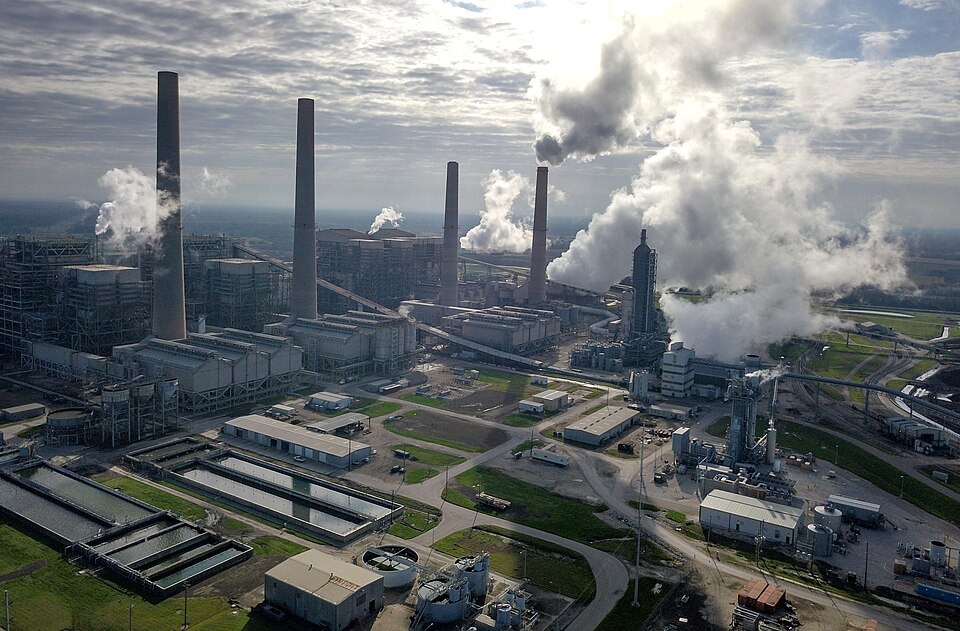
Fort Bend County Launches First-Ever Air Quality Study to Track Neighborhood-Level Pollution and Health Impact
Fort Bend County is growing at a pace few communities in Texas can match—and with that growth comes new pressures that aren’t always visible.
More homes, more traffic, and more development are reshaping daily life across the county. Now, local leaders are taking a closer look at something that affects every resident but often goes unnoticed: air quality.
Fort Bend County Health & Human Services (FBCHHS), in partnership with The University of Texas at Austin and UTHealth Houston School of Public Health, has launched the county’s first-ever comprehensive air quality study, aimed at understanding how pollution varies across neighborhoods and what it means for community health.
For families, this initiative goes beyond research. It’s about understanding how rapid growth may be influencing long-term health—and ensuring future decisions are grounded in real, local data.
Public Invited to April 15 Open House in Rosenberg
Residents will have a chance to see the work firsthand during a free public open house on April 15, 2026, from 11 a.m. to 1 p.m. at the George Memorial Library in Rosenberg.
The event offers a rare behind-the-scenes look at how air quality is measured, along with opportunities to meet researchers and watch live demonstrations of monitoring equipment.
“This study represents an important step in understanding how air quality impacts the health of our residents across Fort Bend County,” said Dr. Letosha Gale-Lowe, Local Health Authority and FBCHHS Director.
The open house is designed to make the science accessible—and to ensure residents are part of the conversation as the county grows.

Mobile Lab Will Track Air Pollution Block by Block
At the center of the study is a three-week field monitoring campaign using a mobile air quality laboratory that will travel throughout Fort Bend County neighborhoods.
The lab will collect data both while in motion and at stationary locations, allowing researchers to build a detailed, street-level picture of air quality across the county.
Equipped with advanced technology—including the Vocus mass spectrometer—the mobile unit can measure more than 1,000 air pollutants in real time, offering an unprecedented level of detail for a local study.
Researchers will focus on key pollutants such as ozone (O₃), fine particulate matter (PM2.5), nitrogen oxides (NOx), carbon monoxide (CO), sulfur dioxide (SO₂), and volatile organic compounds (VOCs), helping identify patterns, potential pollution hotspots, and areas of concern.
“Community engagement is a critical part of this work,” said Dr. Pawel K. Misztal, Principal Investigator with The University of Texas at Austin.
Why Air Quality Matters—Especially in a Fast-Growing County
Air quality isn’t just an environmental issue—it’s directly tied to public health.
According to the U.S. Environmental Protection Agency (EPA), fine particulate matter (PM2.5) can penetrate deep into the lungs and enter the bloodstream, contributing to respiratory disease, heart conditions, and other serious health risks. Ozone pollution, a key component of smog, can trigger asthma attacks and reduce lung function, particularly in children and older adults.
In a county experiencing rapid population growth like Fort Bend, these concerns become more pressing. Increased traffic, construction, and development can influence localized air conditions—making neighborhood-level data essential for understanding real exposure.
Turning Data Into Action for Healthier Communities
Beyond measuring pollution, the study is designed to create a baseline assessment of air quality across Fort Bend County—something officials say is critical for shaping future solutions and policies.
“This collaboration helps translate complex environmental data into meaningful public health insights,” said Dr. Kevin Lanza of UTHealth Houston School of Public Health.
Fort Bend County Health & Human Services, a Public Health Accreditation Board (PHAB)-accredited agency, plays a key role in that effort—working to promote and protect health through disease prevention, emergency preparedness, and ensuring equitable access to essential services.
The partnership also brings together leading institutions. The Cockrell School of Engineering at The University of Texas at Austin—ranked the top engineering school in Texas with a century-long legacy—contributes advanced research capabilities, while UTHealth Houston School of Public Health, founded in 1967 as the state’s first public health school, provides expertise in connecting environmental data to real-world health outcomes across its campuses statewide.
Together, the collaboration reflects a broader shift toward data-driven decision-making in fast-growing communities.

What Residents May Notice—and What Comes Next
During the monitoring period, residents may see the mobile laboratory traveling through neighborhoods as it collects data across the county.
Preliminary findings are expected in mid-2026, offering the first detailed look at how air quality varies from one part of Fort Bend County to another—and where attention may be needed most.
Why This Matters for Fort Bend County Residents
For homeowners, parents, and community leaders, this study could help shape decisions that directly impact daily life—from future development patterns to public health initiatives and infrastructure planning.
In a county defined by rapid growth, having reliable, neighborhood-level air quality data provides something increasingly important: the ability to grow with intention.
It’s not just about understanding today’s conditions—it’s about building a healthier future as Fort Bend County continues to expand.
Residents are encouraged to attend the April 15 open house and stay engaged as findings are released. As the county evolves, initiatives like this reflect a broader commitment to balancing growth with health, transparency, and long-term community well-being.
Stay connected with My Neighborhood News for continued updates on this study and other developments shaping Fort Bend County.

 Tiffany Krenek has been on the My Neighborhood News team since August 2021. She is passionate about curating and sharing content that enriches the lives of our readers in a personal, meaningful way. A loving mother and wife, Tiffany and her family live in the West Houston/Cypress region.
Local business spotlight
Grow your business
where trust already lives.
Let’s introduce your business to the neighbors nearby.
Have a local favorite?
Let’s make an introduction.
Leave your email and our team will reach out with ways to promote your business.
Give a local favorite a little love.
Know a business your neighbors should discover? Tell us who they are.
We couldn’t send that just yet. Please try again.