







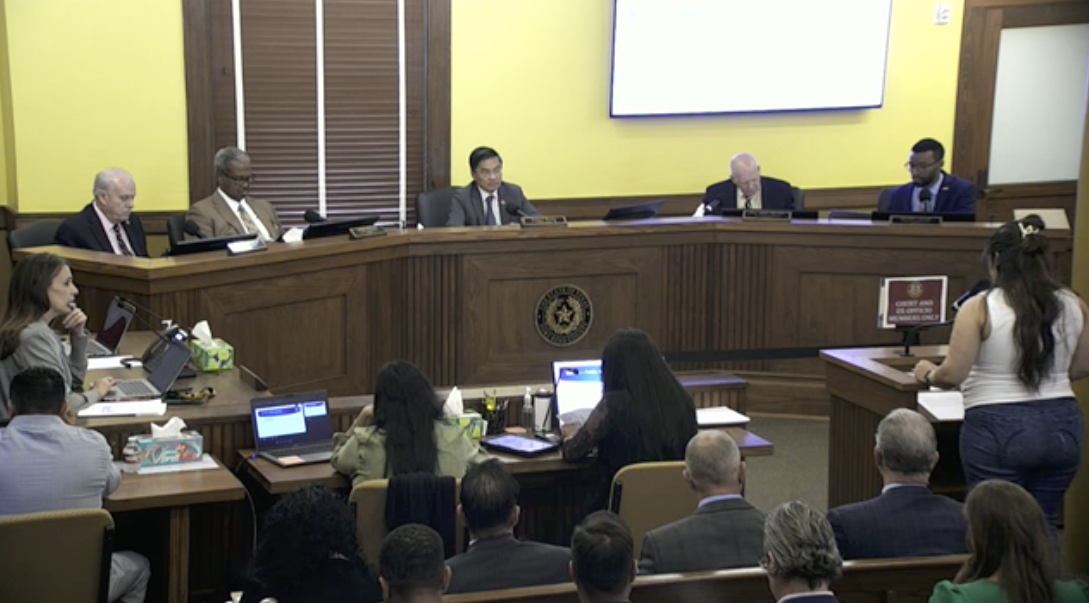
Fort Bend County Commissioners Court Recap: Animal Shelter Plans, Road Debate and Taxpayer Questions for Falcon Point East
For Fort Bend County residents, the September 24 Commissioners Court meeting was about much more than moving through a lengthy agenda. Several discussions touched directly on how a fast-growing county plans for roads, public safety, animal services, county facilities and the long-term cost of providing those services.
For residents of Falcon Point East, the meeting offered a useful look at some of the choices county leaders are weighing as population growth places new demands on infrastructure and services. Some matters were approved, while others were deliberately left unresolved so county staff and commissioners could gather more information.
The regular meeting was held September 24 at the Fort Bend County Courthouse in Richmond. The county's official agenda confirms the meeting included public hearings, financial matters, engineering projects, law enforcement agreements and a workshop on a proposed Fort Bend County Animal Shelter and Adoption Center.
Proposed Lou Waters Parkway Alignment Put on Hold
One of the afternoon's most personal discussions involved a proposed change to the Fort Bend County Major Thoroughfare Plan involving Lou Waters Parkway and other road connections in Precinct 1. The official agenda identified the proposal as part of a broader modification involving Lou Waters Parkway, Fulshear Lakes Way, Ridgeside Drive/Pecan Knoll Drive, Lifestyle Boulevard and Polo Ranch Boulevard/Grandstand Parkway/Conover Drive.
Several residents and property owners told commissioners that the proposed alignment could divide working agricultural land and make farming more difficult.
One speaker, whose family has farmed affected property for decades, asked the county to consider an alignment that would reduce the impact on agricultural operations. Another property owner urged commissioners to study alternatives before establishing the roadway alignment.
County engineering staff clarified that the proposal did not mean construction was imminent. According to the discussion, no funding is currently identified for construction of that portion of the road. The Major Thoroughfare Plan instead establishes a future alignment that could be used if the property develops, potentially requiring a developer to construct the roadway.
Rather than approving the proposed alignment, Commissioners Court unanimously tabled the item so engineering staff could work further with the affected families.
For a county where suburban development increasingly meets longtime agricultural property, the discussion illustrated a familiar challenge: planning road connections for future growth while considering the people already living and working on the land.
New Fort Bend County Animal Shelter Takes a Major Step Into Public Discussion
The largest forward-looking conversation of the meeting centered on plans for a new Fort Bend County Animal Shelter and Adoption Center.
Commissioners did not approve construction Thursday. An action item involving agreements for financing, development and construction was pulled for consideration at a future meeting, while commissioners held an extensive workshop to review the concept. The official agenda confirms that the workshop included presentations from Shelter Planners of America and Sustainability Partners.
The concept presented to commissioners includes two facilities.
The main animal shelter would be located on county-owned property in the Rosenberg area near Cottonwood Road and the Medical Examiner's Office. Plans discussed during the meeting include separate adoption and intake areas, dog and cat housing, a medical clinic, administrative space, exercise yards, an education area and room for future expansion.
The proposed shelter would also use a two-corridor layout intended to separate public traffic from behind-the-scenes shelter operations.
A second, smaller satellite adoption center is proposed in the Fulshear area near FM 1093. The approximately 10,000-square-foot concept presented to commissioners would house about 30 dogs and 22 cats and would be focused primarily on adoptions. County officials said the county already owns the property being considered for that facility.
For families in Falcon Point East who adopt pets, volunteer with rescue organizations or depend on county animal services, the proposal could eventually change how residents interact with the county shelter system.
Questions Remain About Cost, Staffing and Whether Existing Buildings Could Be Used
The conversation was not limited to the benefits of a newer facility.
Residents speaking before the workshop asked commissioners to consider less expensive alternatives, including converting an existing building instead of constructing an entirely new shelter.
During the workshop, commissioners raised the same question. Animal Services and shelter planning representatives explained that converting an existing building could save money in some cases, but said shelter facilities require extensive plumbing, drainage, sanitation systems and specialized layouts that can make retrofits complicated.
The current conceptual cost discussed for the main facility was approximately $30 million to $34 million, but commissioners emphasized that the financial model is not yet complete. No final construction price was approved at the meeting.
Questions also remain about operating expenses and staffing.
Commissioners requested a longer-term staffing projection, including what the county would need to spend not only when the facility opens but several years later. County staff said Health and Human Services is working on a five-year projection.
That distinction matters because constructing a building is only one part of the expense. Employees, utilities, animal care, maintenance, medical services and other operating costs continue year after year.

County Considers Different Financing Model for Animal Shelter
Sustainability Partners presented commissioners with what it described as an "infrastructure as a service" financing model.
The presentation included potential financing terms of 20 years at 4.99% or 25 years at 5.13% for the facility, along with shorter options for equipment and building systems. Those terms were presented as options rather than an approved financing agreement.
Under the concept discussed, Sustainability Partners would help finance infrastructure and remain involved with maintenance, warranties and replacement of certain equipment over its useful life.
County officials said the payments would generally be treated as an operating expense rather than traditional county debt, which prompted considerable discussion about the effect on the county's operating budget and tax-rate calculations.
Budget officials cautioned that the county still needs to determine whether the annual cost could be absorbed without reducing other spending, using fund balance or making other adjustments.
Commissioners also discussed whether County Assistance District sales-tax revenues could provide another funding option.
No financing method was selected Thursday.
Epicenter Receives Additional Operating Support
Commissioners also approved a transfer of $728,250 from non-departmental contingency funds to the Fort Bend Epicenter General Fund for six months of maintenance and operating subsidies.
The official agenda breaks that amount into a $398,250 advance payment and another $330,000 payment for Epicenter maintenance operations under the county's existing agreement.
During discussion, one commissioner noted that county subsidies to the facility are approaching $4 million to date and said future county projects should account carefully for ongoing operating costs. That figure was stated during the meeting and should be understood as the commissioner's characterization of cumulative subsidies, not a separate total published in the agenda.
The county auditor said officials cannot currently project when the Epicenter will operate with a surplus, making the additional budget transfer necessary to keep expenditures within the county's approved budget.
The item passed unanimously.
Law Enforcement Contracts With Three MUDs Are Tabled
A procedural disagreement over law enforcement services also became one of the meeting's longer discussions.
Three agreements involved Fort Bend County MUD 155, MUD 5 and MUD 162, with law enforcement services proposed to continue through the Precinct 4 Constable's Office. The official agenda shows the agreements would have extended services through September 30, 2027.
The complication is that the districts are now located in Precinct 3 following redistricting.
Commissioners and representatives of the constable offices debated whether the districts should continue choosing the Precinct 4 Constable's Office or transition to services associated with their current precinct.
Supporters of continuing the existing arrangement said the MUD boards should be able to select the law enforcement provider they prefer. Concerns were also raised about coordination between precinct offices and the precedent created when a constable provides contracted services outside the precinct in which the district is located.
The court ultimately voted unanimously to table the three agreements so additional discussions can take place.
Officials said existing services would continue on a month-to-month basis if necessary, meaning the decision did not immediately end patrol services.
Revised County Position List Passes 3-2
Commissioners also voted 3-2 to approve a revised Fiscal Year 2027 county position list.
The agenda described the action as approval of a revised FY2027 Proposed Positions report effective October 1, replacing the previously approved position list.
County staff explained that part of the revision corrected how several positions were categorized, changing designations from county-funded to grant- or contract-funded without changing the number of those positions.
The discussion also returned to previously approved changes affecting positions in the County Attorney's Office. One commissioner objected to the earlier reductions and described them as political retribution, while staff clarified that the reason the revised list returned on September 24 was to correct funding classifications.
Because those political characterizations reflected the views of individual commissioners, they should not be read as findings by the court.

Outside Legal Services Increase by $100,000
In another divided vote, commissioners approved an amendment increasing the county's agreement with Randle Law Firm by $100,000, bringing the contract's maximum value to $200,000. The agreement is funded through non-departmental fees.
Two commissioners opposed the measure and argued during the meeting that outside legal expenses duplicated work that could be performed internally.
The amendment passed 3-2.
Suicide Prevention Awareness Recognized
The meeting also included a proclamation highlighting suicide prevention and the role of behavioral health professionals, educators, first responders and community organizations.
County officials recognized September as Suicide Prevention Awareness Month and discussed the importance of recognizing warning signs, reducing stigma and connecting people with mental health services.
While many Commissioners Court agendas are dominated by contracts, roads and budgets, the proclamation was a reminder that county government also touches residents through behavioral health programs and community services.
What Happens Next
Several of the most closely watched matters from September 24 remain unfinished.
County engineering staff is expected to continue discussions with affected property owners before the Lou Waters Parkway alignment returns to Commissioners Court.
The animal shelter proposal also requires additional financial work. Commissioners requested operating-cost projections, staffing estimates and a clearer comparison between the Sustainability Partners model and more traditional county construction and maintenance before being asked to approve a final approach.
The three MUD law enforcement agreements are also expected to return after further discussion among county officials, constable offices and the districts.
For Falcon Point East residents, those follow-up decisions may ultimately be more consequential than Thursday's debate itself. Fort Bend County continues to grow, and each of these discussions comes back to the same underlying question: how should county government expand roads and public services while balancing cost, existing communities and long-term taxpayer obligations?
My Neighborhood News will continue following Fort Bend County Commissioners Court as these proposals move forward.

 Tiffany Krenek has been on the My Neighborhood News team since August 2021. She is passionate about curating and sharing content that enriches the lives of our readers in a personal, meaningful way. A loving mother and wife, Tiffany and her family live in the West Houston/Cypress region.
Local business spotlight
Grow your business
where trust already lives.
Let’s introduce your business to the neighbors nearby.
Have a local favorite?
Let’s make an introduction.
Leave your email and our team will reach out with ways to promote your business.
Give a local favorite a little love.
Know a business your neighbors should discover? Tell us who they are.
We couldn’t send that just yet. Please try again.