






Did You Know? What Morningside Trails Residents Should — and Shouldn’t — Put in the Recycling Cart
For many Morningside Trails households, recycling can feel pretty straightforward: finish with a bottle, flatten a box, drop it in the cart and roll everything to the curb.
But one misplaced item can create a much bigger problem than many residents realize.
Tiger Sanitation, the trash and recycling provider serving Morningside Trails, says contamination remains one of the biggest challenges facing curbside recycling programs. In fact, according to the company, approximately 20% of what goes into the average household recycling cart does not belong there.
That works out to roughly one out of every five items.
And that matters because recycling the wrong things can make it harder — and more expensive — to recycle the right ones.
What Can Morningside Trails Residents Recycle?
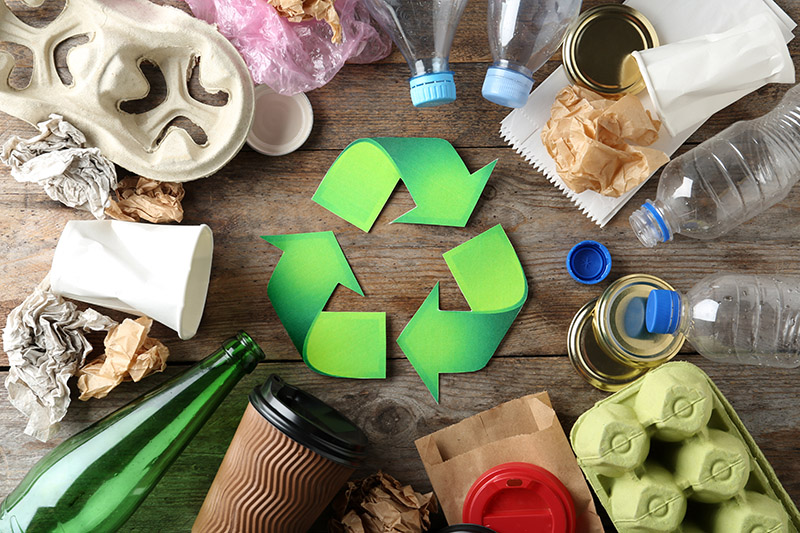
Tiger Sanitation accepts several common household recyclables through its residential recycling program, provided the materials are clean and, where applicable, free of food residue.
Accepted items include:
- Clean, dry cardboard
- Newspapers, loose office paper and magazines
- Plastics numbered 1 through 7 with no food residue
- Aluminum beverage cans
- Steel and tin cans with no food residue
- Glass bottles and jars with no food residue
For families trying to make recycling part of their weekly routine, the key words are clean and dry.
A cardboard shipping box, for example, may be recyclable. A greasy pizza box contaminated with food is not.
What Should Stay Out of the Recycling Cart?
This is where a quick check before tossing something in the bin can make a difference.
Tiger Sanitation advises residents not to place food waste, food-contaminated materials, textiles, diapers, pet waste, electronics, hoses, extension cords, holiday lights, clothing hangers, plastic bags, plastic film, yard waste, dirt, wood, concrete, brick, construction debris, polystyrene foam, packing materials, scrap metal, auto parts or tires in the curbside recycling cart.
The company sums up that guidance with a simple recycling rule: “When in doubt, throw it out.”
That may sound counterintuitive in a culture accustomed to being encouraged to recycle more, but the goal is not simply to put more material in a recycling cart. The goal is to make sure the material placed there can actually be processed and turned into something new.
Why Recycling Contamination Matters
Tiger Sanitation identifies two types of recycling contamination: source-generated contamination and process-generated contamination.
Source-generated contamination begins at home. It includes items such as food waste, diapers, yard debris and electronics that should never have been placed in a recycling cart.
The consequences can spread beyond the individual item.
According to Tiger Sanitation, “Contamination degrades and devalues the highly recyclable items (paper, cardboard, plastics, tin, and aluminum cans), increases the time and cost to process them, and often ultimately results in the desirable materials being landfilled.”
That means a resident trying to recycle too much can sometimes unintentionally reduce the chances that otherwise recyclable materials will make it through the system.
For Morningside Trails residents looking for a practical way to support sustainable waste management close to home, putting only accepted materials in the recycling cart is one of the simplest steps available.

What Happens After the Cart Leaves the Curb?
Morningside Trails residents use what is known as a single-stream recycling system.
Single-stream recycling allows different recyclable materials to be placed together in a large curbside cart rather than requiring residents to separate paper, plastic, cans and other materials at home.
After collection, those materials are compacted in a truck and transported to a material recovery facility, commonly called an MRF or recycling sorting facility.
There, industrial equipment and workers separate the mixed materials into different categories for processing.
The convenience of single-stream recycling comes with a tradeoff: everything in the cart travels through the system together.
Tiger Sanitation explains that because materials are compacted, unloaded and moved by heavy equipment before sorting begins, contaminants such as food waste can spread throughout recyclable paper, cardboard and plastic. Broken glass can also become mixed into other materials.
Plastic Bags Can Cause an Unexpected Problem
One item that seems recyclable but should not go into Morningside Trails curbside recycling carts is the everyday plastic shopping bag.
Plastic bags and film can become wrapped around moving parts inside recycling sorting equipment. Tiger Sanitation says sorting systems may need to be stopped multiple times a day so workers can manually remove plastic caught in machinery.
Instead, residents who want to recycle shopping bags are encouraged to return them to participating retailers. Many grocery stores provide dedicated plastic-bag collection bins near their entrances.
Keeping bags and plastic film out of curbside carts can help protect recycling equipment, workers and the materials residents intended to recycle.
What About Glass?
This part can be a little more complicated.
Tiger Sanitation lists clean glass bottles and jars among acceptable residential recyclables, but the company also explains that glass presents particular challenges in a single-stream recycling system.
Glass can break during collection and sorting, mixing with paper and cardboard and creating safety and equipment concerns at processing facilities. It is also heavy, which increases transportation costs and fuel use.
Tiger Sanitation notes that the nearest glass processing plant serving the San Antonio area is in Midlothian, Texas, adding transportation distance to the recycling process.
For residents who want to maximize the environmental value of glass recycling, Tiger Sanitation says taking bottles and jars directly to a dedicated glass collection location can sometimes be a better option because the glass remains separate from other recyclables.
In its broader recycling guidance, the company says residents can further reduce contamination in single-stream carts by keeping out both plastic bags and, when practical, glass.
Why the Recycling Market Changed
Recycling does not end when material reaches a sorting facility.
Once paper, cardboard, plastics and metals are separated, those materials must have buyers or processors capable of turning them into new products.
For years, heavily contaminated recyclable materials generated in the United States were exported to overseas processors. That system changed significantly beginning in 2018 as China and other international markets tightened restrictions on contaminated recyclable imports.
Those changes reduced the number of available markets for some recycled commodities and increased pressure on local recycling programs to produce cleaner, higher-quality materials.
For communities such as Morningside Trails, that global issue comes all the way back to a surprisingly local decision: what goes into the household recycling cart.
A Small Habit at Home Can Make a Bigger Difference
Residents do not need to memorize the entire recycling industry to make a meaningful contribution.
A quick look inside the cart before collection day can go a long way.
Cardboard should be clean and dry. Containers should be free of food residue. Plastic bags should stay out. Food waste, diapers, electronics, yard debris and construction materials belong somewhere other than the recycling cart.
The message from Tiger Sanitation is ultimately straightforward: “the future of recycling needs your help.”
For Morningside Trails households, recycling correctly may mean recycling a little more selectively — but it can also give the materials that do belong in the cart a better chance of actually becoming something new.
Residents can stay tuned to My Neighborhood News for more practical Morningside Trails service reminders, neighborhood updates and information that can make day-to-day community life a little easier.

 Tiffany Krenek has been on the My Neighborhood News team since August 2021. She is passionate about curating and sharing content that enriches the lives of our readers in a personal, meaningful way. A loving mother and wife, Tiffany and her family live in the West Houston/Cypress region.
Local business spotlight
Grow your business
where trust already lives.
Let’s introduce your business to the neighbors nearby.
Have a local favorite?
Let’s make an introduction.
Leave your email and our team will reach out with ways to promote your business.
Give a local favorite a little love.
Know a business your neighbors should discover? Tell us who they are.
We couldn’t send that just yet. Please try again.