






Brown Spots Appearing in Fulshear Lawns? What Homeowners Should Check First
Brown or yellow patches in the lawn can be frustrating, particularly when the grass looked healthy only a few weeks earlier. As Greater Houston moves toward fall, homeowners may begin wondering whether those discolored areas are simply lingering signs of summer stress—or evidence of a lawn disease that needs attention.
For residents in Fulshear, one possible culprit is large patch, a common fungal disease of warm-season grasses. Many homeowners and lawn-care professionals still refer to it as brown patch, although Texas A&M AgriLife Extension Service uses “large patch” when describing the disease in St. Augustine, zoysia, Bermuda and other warm-season turfgrasses.
However, not every brown spot is caused by fungus. Heat stress, uneven irrigation, chinch bugs, take-all root rot, poor drainage and mowing damage can produce similar symptoms, making a closer inspection important before any treatment is applied.
What causes large patch in Houston-area lawns?
According to Texas A&M AgriLife Extension Service, large patch is caused by the fungus Rhizoctonia solani. The fungus can remain in the soil and thatch throughout the year, but disease activity develops under certain environmental conditions.
Large patch is generally most active when temperatures become cooler and the soil stays wet. Texas A&M AgriLife reports that the disease occurs when temperatures fall below approximately 70 degrees, making fall and spring the most common times for symptoms to appear.
That means early September’s brown areas should not automatically be diagnosed as large patch. Greater Houston often remains quite hot at this point in the year, although changing temperatures, rain, irrigation and prolonged moisture can set the stage for problems as fall approaches.
What does large patch look like?
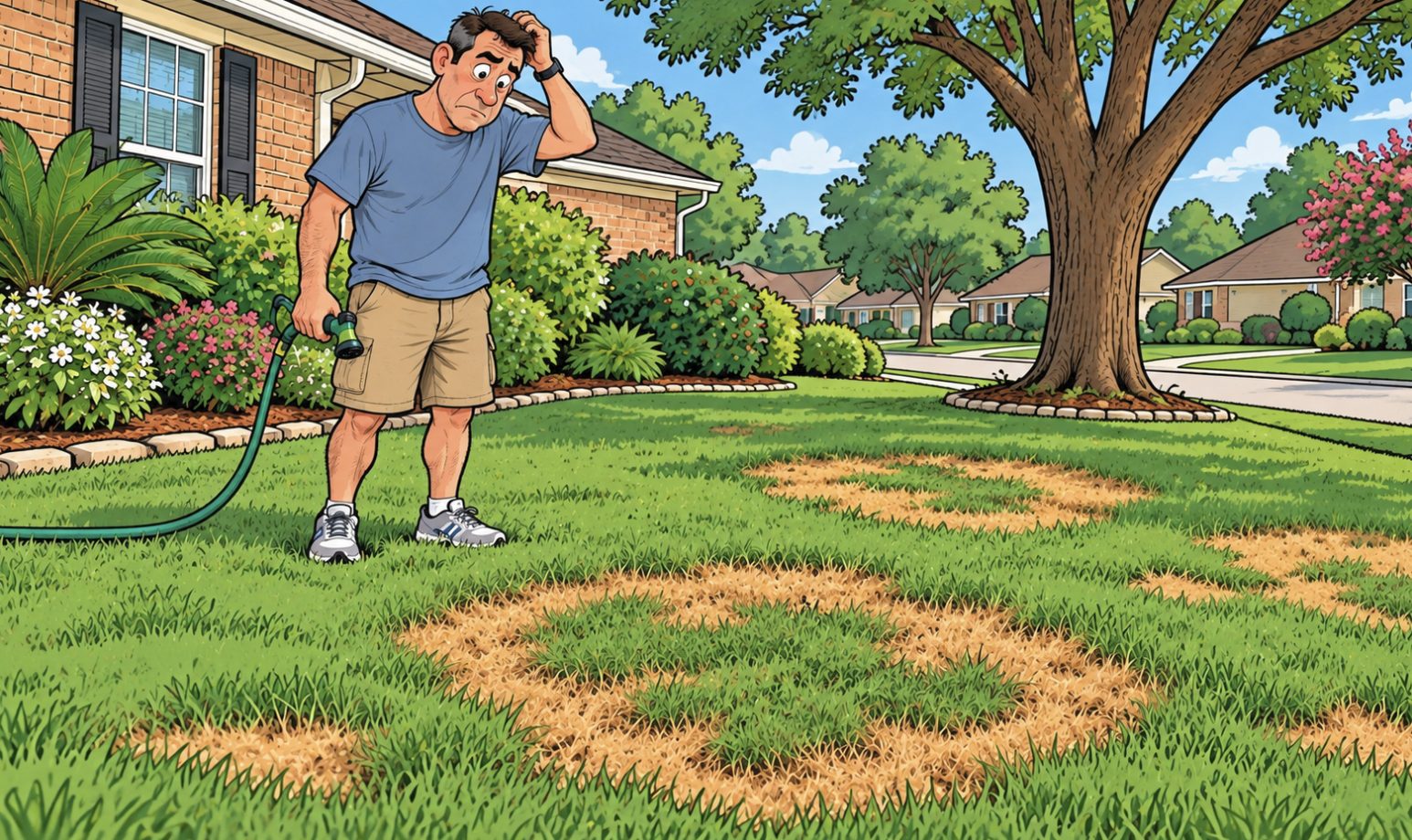
The disease typically begins as circular or irregular areas of discolored grass that gradually expand. Homeowners may notice yellow or orange grass around the outer edge, with brown or thinning turf closer to the center.
One useful clue is how the affected grass behaves when gently pulled. Texas A&M AgriLife explains that newly infected blades may separate easily from the runners, or stolons, because the fungus damages the area where the leaf attaches. Dark brown lesions may also be visible near the base of affected stems.
St. Augustine and zoysia are especially susceptible. Because St. Augustine is widely used throughout Greater Houston, large patch can become a recurring concern in neighborhood lawns once cooler, damp conditions arrive.

Brown grass can have several other causes
Before reaching for a fungicide, Fulshear homeowners should consider where the damage is located and how it developed.
Brown areas in the hottest, sunniest parts of a St. Augustine lawn may point to chinch bugs, particularly if the damage continues to spread despite adequate watering. Grass that appears weak, yellow and easy to lift from the soil may have a root problem such as take-all root rot. Straight lines, isolated dry strips or brown areas near pavement can indicate uneven sprinkler coverage or heat stress.
Standing water, compacted soil, excessive thatch and frequent nighttime irrigation can also weaken turf and make disease more likely. A diagnosis based only on the lawn’s color can lead to unnecessary treatments while the actual problem continues.
How can homeowners reduce the risk?
Texas A&M AgriLife recommends several lawn-care practices that can help discourage large patch:
- Water only when necessary and irrigate early in the morning.
- Correct areas with poor drainage or standing water.
- Avoid excessive nitrogen fertilizer, especially late in the growing season.
- Reduce heavy thatch through appropriate lawn maintenance.
- Keep St. Augustine grass approximately two to three inches tall.
- Avoid mowing the lawn too short.
- Limit the amount of time grass blades remain wet.
Overwatering is especially important to watch. As temperatures begin to moderate, lawns usually need less irrigation than they did during the height of summer. Continuing the same watering schedule can leave the soil unnecessarily wet and create more favorable conditions for fungal disease.
Should homeowners apply a fungicide?
Fungicides can help manage confirmed large patch, but timing matters. Texas A&M AgriLife advises that preventive applications are most effective before symptoms become widespread, generally when fall soil temperatures begin falling below 70 degrees.
Homeowners should first confirm that fungus is the likely cause. A reputable lawn-care professional, landscape specialist or county Extension office may be able to help distinguish large patch from insects, root diseases and irrigation problems. Anyone applying a fungicide should select a product labeled for the specific grass and disease and follow all label directions.
Residents using a professional lawn service may also want to ask what evidence supports the diagnosis rather than approving a broad treatment based solely on visible brown grass.
A little attention now can prevent a larger fall problem
A few discolored areas do not necessarily mean a lawn is being lost. Large patch primarily damages grass blades and their attachment points, and lightly affected turf can recover as growing conditions improve. Repeated or severe outbreaks, however, can leave a lawn thin and vulnerable.
For homeowners in Fulshear, early observation is the best first step. Check sprinkler coverage, look closely at the edges of damaged areas and note whether the affected blades pull loose easily. Identifying the real cause now can help residents avoid unnecessary products—and keep a manageable lawn problem from becoming a much larger one later this fall.

 Tiffany Krenek has been on the My Neighborhood News team since August 2021. She is passionate about curating and sharing content that enriches the lives of our readers in a personal, meaningful way. A loving mother and wife, Tiffany and her family live in the West Houston/Cypress region.
Local business spotlight
Grow your business
where trust already lives.
Let’s introduce your business to the neighbors nearby.
Have a local favorite?
Let’s make an introduction.
Leave your email and our team will reach out with ways to promote your business.
Give a local favorite a little love.
Know a business your neighbors should discover? Tell us who they are.
We couldn’t send that just yet. Please try again.