







UT Longhorn Band Celebrates 70 Years of Women, Honoring the Trailblazers Who Changed Texas Marching Band History
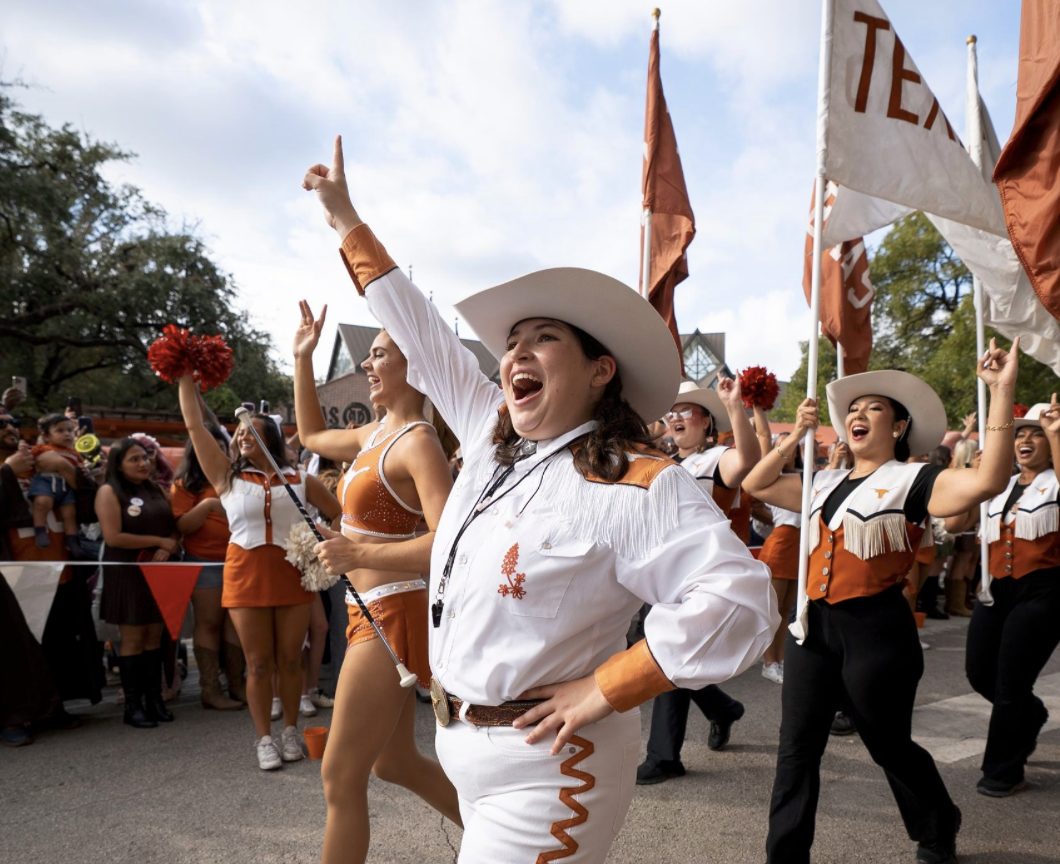
For generations of University of Texas students, alumni and Longhorn families across Texas, the sound of the Longhorn Band has been part of what makes a fall Saturday in Austin feel like home. But behind the familiar music, burnt orange uniforms and traditions at DKR-Texas Memorial Stadium is a story that began 70 years ago, when a small group of women earned their place in a marching band that had previously been open only to men.
That history took center stage during the 2026 Longhorn Alumni Band Weekend, when the University of Texas at Austin celebrated seven decades of women in the Longhorn Band. The anniversary brought together some of the program's earliest female members, a former director who broke barriers of her own, and today's student leaders who are carrying their legacy forward.
The celebration, documented in a November 9, 2026, UT News feature by writer Kaiya Little, offered a look at how much has changed since 1956 and the women whose determination helped make those changes possible.
How 12 Women Changed the History of the University of Texas Longhorn Band
When Longhorn Band director Vincent DiNino opened the program to women in 1956, the decision marked a turning point for an organization that had been part of the University of Texas since 1900.
Among the first women recruited was Leah Raye Sexton of Harlingen, Texas, who became the band's first female drummer. DiNino offered Sexton a $50 scholarship to join, a meaningful amount at a time when one semester of university tuition cost just $25.
Through personal connections and word of mouth, the original group grew to 12 women.
One of them was Donna Beth McCormick, Sexton's roommate, who had played flute in high school. McCormick had already sold her instrument before arriving at UT because women had not been permitted to participate in the marching band. When the opportunity finally opened, she borrowed a flute from another student in her dormitory.
Joining the band, however, was only the beginning.
The women faced skepticism about whether they could march alongside approximately 100 male members. Their early uniforms were a mixture of older shirts, pants and handmade felt skirts, and they initially weren't included in the band's marching formations.
That changed during the 1957 flu epidemic, when illness left the band short of performers. The women stepped in to fill the empty positions, showing they could meet the same marching demands as their male counterparts.
As McCormick recalled in Little's UT News report, the women faced questions about their ability to perform the band's traditional marching steps.
“They were messing with strong women,” McCormick said.
The experience stayed with her throughout a career that included political campaign work across the country and several positions at the University of Texas. Often finding herself the only woman in professional settings, McCormick continued encouraging younger women to pursue opportunities and make their voices heard.
“We’ve paved the way,” she said. “I tell the girls in the band, ‘You can do anything you want to.’”
McCormick and Marye Hortsmann Davis, another member of the program's earliest groups of women, were recognized during the 2026 anniversary celebration.

Former Longhorn Band Director Paula Crider Returns for Anniversary Performance
Another memorable moment came when Paula Crider returned to the conductor's podium at DKR-Texas Memorial Stadium.
Crider, who directed the Longhorn Band from 1995 to 1999, remains the only woman to have served as the band's director in the university's history.
During the Longhorn Alumni Band's performance at the Texas Longhorns' game against Mississippi State, Crider once again stood above the musicians, guiding the familiar combination of brass, woodwinds and percussion.
For Crider, conducting has always been about more than keeping musicians together.
“Your body can become alive with the music-making,” she told UT News, describing the powerful connection between a conductor and the musicians performing together.
Her path into leadership was not without challenges. As a woman occupying a position traditionally held by men, Crider recalled feeling an added responsibility to demonstrate her abilities.
“There was always pressure to prove myself, because there’s always that doubt, especially when you’re someone who is taking on a role that’s never been taken on before,” she said. “That made me stronger. It made me determined.”
Although Crider has retired from her university professorship, she continues conducting and teaching workshops around the country and internationally.
She told Little that some of her most meaningful experiences now come from meeting young women and fellow music educators who see her career as an example of what they might accomplish themselves.
For students considering careers in music education, her story is a reminder that seeing someone succeed in a leadership position can make a difference in whether they believe that opportunity is possible for them.
Today's Longhorn Band Leaders Carry the Tradition Forward
Seven decades after those first 12 women joined the program, the Longhorn Band has grown into a 425-member organization where women hold prominent student leadership positions.
Among them is Ashley Young, a senior English major who serves as president of the Longhorn Band Student Association and a section leader for the horns.
Young's involvement grew from serving on the band's student council to becoming vice president of social media and ultimately president.
Her responsibilities include leading meetings, making announcements after rehearsals and organizing social events. What began as an opportunity to serve has also helped her develop closer friendships across the large organization.
“There are 425 people, but this year I’ve had the chance to really talk to a lot more,” Young told UT News.
Standing on the band ladder in front of hundreds of fellow musicians initially brought some nerves, but Young said her confidence grew as the season progressed.
As she approaches the end of her final year in the band, the anniversary has also given her an opportunity to appreciate the women who made her own experience possible.
“I’m just so grateful to those women for paving the way for all of us,” she said.
For Young, being part of the Longhorn Band means joining a tradition that has been shaped by generations of students while also finding a way to contribute something of her own.
Madison Bookman Becomes the Longhorn Band's Eighth Female Drum Major
Standing alongside Young during the 2026 football season is Madison Bookman, a senior studying music education who serves as the Longhorn Band's drum major.
Bookman is the eighth woman in the program's history to hold the position, following a line of student leaders that began with the band's first female drum major, Julia Cook.
As drum major, Bookman helps lead performances and maintain the tempo that keeps hundreds of musicians moving and playing together.
During Longhorn Alumni Band Weekend, she also had the opportunity to gather with previous female drum majors, connecting today's leadership with the women who held the position before her.
“With it being 70 years, it hit me,” Bookman told UT News, reflecting on the anniversary and her place in the band's history.
She credited earlier leaders, including McCormick, Crider and Cook, for helping create opportunities that once would have been difficult for women to imagine.
Bookman also expressed hope that future generations will reach a point where women serving as band directors, drum majors and other leaders no longer stands out as something unusual.
“I think we’re getting to a place now where it’s very normalized for women to be in these roles,” she said.
Why the Longhorn Band's 70-Year Milestone Matters Beyond UT Austin
The Longhorn Band, widely known as the Showband of the Southwest, has been part of University of Texas traditions since its founding in 1900.
For Texas families who have attended Longhorn football games, watched halftime performances or followed students into college marching band programs, the organization's history reaches well beyond the university campus.
The story of women in the Longhorn Band also reflects the broader changes in music education and student leadership over the past seven decades.
In 1956, women had to prove they belonged in the marching formations. Today, women are among the students directing performances, leading sections and helping shape the band's future.
For young musicians in Austin and communities throughout Texas, those examples offer something meaningful: opportunities in music and leadership that earlier generations worked to open.
And for the women who helped make that progress possible, returning to the field alongside today's Longhorns provided a chance to see the lasting impact of their efforts.
Seventy years after 12 women first joined the band, their story has become part of the larger history of the University of Texas, one that continues to unfold with every new class of musicians.
My Neighborhood News will continue sharing stories from Austin and across Texas that celebrate local students, educators, alumni and the people whose contributions help shape their communities.
Source and reporting attribution: This article is based on original reporting by Kaiya Little in her November 9, 2026, University of Texas at Austin UT News feature, “The Longhorn Marching Band Celebrates 70 Years of Women in the Program.” Historical details, interviews and quotations are credited to that reporting.

 Tiffany Krenek has been on the My Neighborhood News team since August 2021. She is passionate about curating and sharing content that enriches the lives of our readers in a personal, meaningful way. A loving mother and wife, Tiffany and her family live in the West Houston/Cypress region.