







Universal Technical Institute Opens San Antonio Campus as Demand Grows for Skilled Trades Workers
For students weighing what comes after high school — and for families looking beyond the traditional four-year college path — a new San Antonio training campus is arriving during a period when many hands-on occupations are expected to need thousands of new and replacement workers.
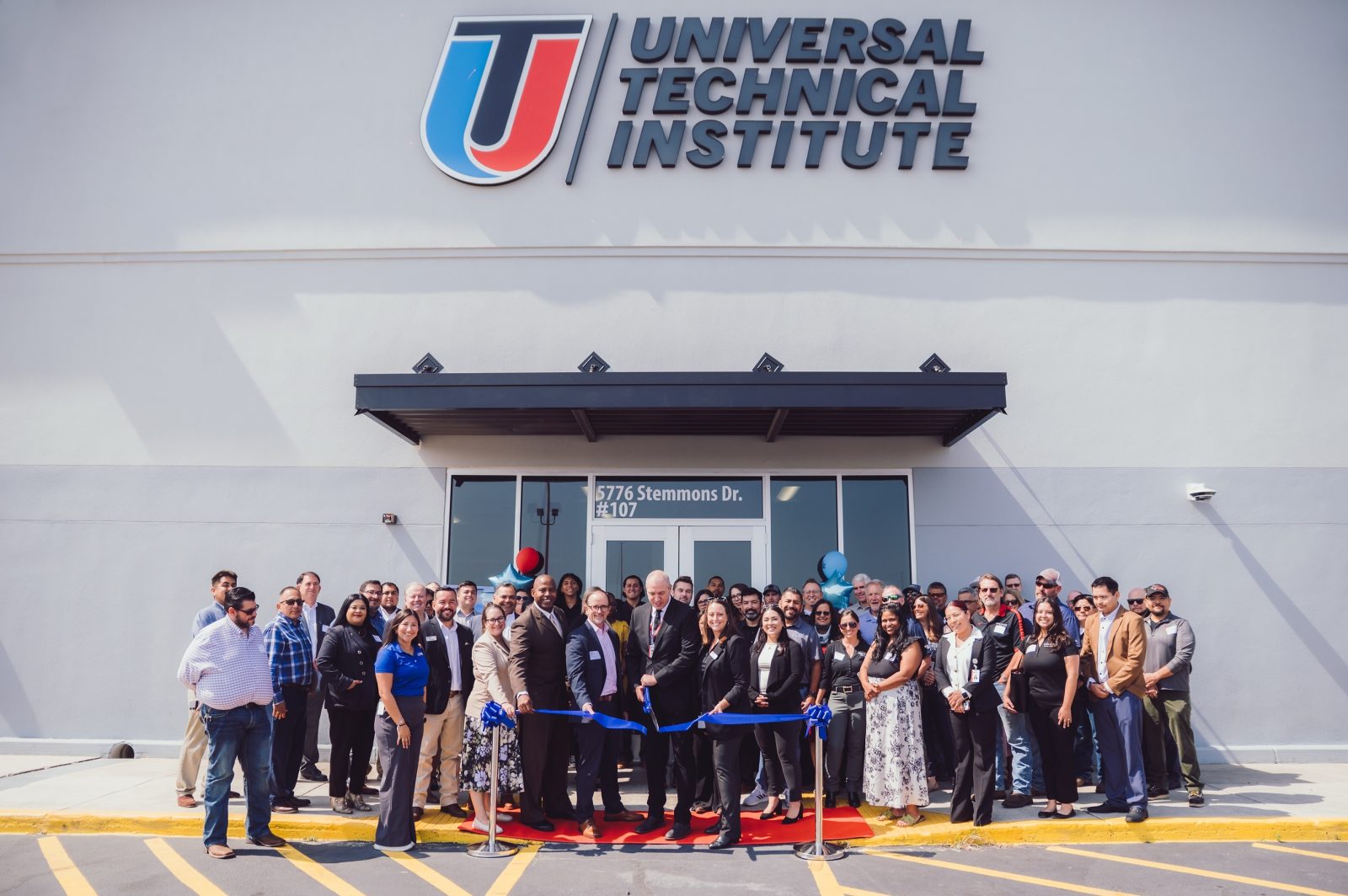
Universal Technical Institute, Inc. recently celebrated the official opening of UTI-San Antonio, its seventh location in Texas and the company’s first campus devoted exclusively to skilled trades training. The campus offers programs in aviation, welding, heating, ventilation, air conditioning and refrigeration, electrical, industrial maintenance, robotics and wind energy.
The expansion is noteworthy beyond San Antonio because the occupations represented on campus include several where federal workforce projections show substantial hiring needs over the next decade. The picture is not uniform — some trades are growing much faster than others — but U.S. Bureau of Labor Statistics data show that retirement, career changes, infrastructure needs, construction, energy development and increasingly automated industrial equipment are expected to keep employers looking for technically trained workers.
UTI-San Antonio Opens With Room for Up to 800 Students
UTI-San Antonio opened this spring and saw new student starts approximately 25 percent above the company's original launch model, according to Universal Technical Institute. At full scale, the campus is expected to serve as many as 800 students.
Public officials, community leaders and employer partners attended the recent ribbon-cutting, where visitors also toured the campus aviation lab and learned about the skilled trades programs offered there.
For Universal Technical Institute Chief Operating Officer Kevin Prehn, the new campus reflects changing conversations students and families are having about education and employment.
“Interest in skilled trades education continues to grow as students weigh the cost of education against career opportunities, time to employment and long-term job stability,” Prehn said. “As artificial intelligence and automation reshape parts of the workforce, many students are seeking careers that emphasize technical expertise, critical thinking and hands-on problem-solving. UTI-San Antonio's programs will help prepare graduates for the demands of the ever-evolving workforce.”
Skilled Trades Workforce Demand Goes Beyond One Campus
Federal workforce projections provide some context for that expansion.
Across installation, maintenance and repair occupations, the U.S. Bureau of Labor Statistics projects about 569,000 job openings each year from 2025 through 2035, on average. Those openings include jobs created by employment growth as well as positions that need to be filled when workers permanently leave an occupation. The group had a median annual wage of $59,620 in May 2025, compared with $50,980 for all occupations.
Several fields represented in UTI-San Antonio's program lineup are projected to grow faster than the overall U.S. workforce.
Electrician employment, for example, is projected to increase 9 percent from 2025 to 2035, compared with 3 percent for all occupations. BLS expects approximately 72,700 electrician openings per year, many resulting from workers changing careers or leaving the workforce. The median annual wage for electricians was $63,190 in May 2025.
For heating, air conditioning and refrigeration mechanics and installers — commonly known as HVAC or HVACR technicians — employment is projected to grow 11 percent from 2025 to 2035, with about 40,600 openings annually. BLS points to commercial construction, including data centers, residential construction and increasingly sophisticated climate-control systems as contributors to demand.
The outlook is even stronger in industrial machinery work. Employment for industrial machinery mechanics, machinery maintenance workers and millwrights is projected to grow 14 percent from 2025 to 2035, with approximately 51,900 openings per year. BLS says continued adoption of automated manufacturing equipment is itself expected to create work for technicians who install, maintain and repair increasingly complex machinery.
That point adds some nuance to the broader discussion surrounding artificial intelligence and automation. Technology can reduce demand for some tasks, but it can also increase the need for people who understand how sophisticated physical equipment operates and how to keep it running.

Welding Remains a Large Workforce Even With Slower Growth
Not every skilled trade is projected to expand at the same pace.
Employment of welders, cutters, solderers and brazers is projected to grow a more modest 2 percent between 2025 and 2035, slightly below the average for all occupations. Still, BLS projects about 40,300 openings each year, largely because existing workers will move into other careers or leave the workforce.
The agency also notes that aging U.S. infrastructure will continue to require welding expertise for work involving bridges, highways and buildings, while manufacturers will continue to employ welders in the production of machinery and metal products. Automation, however, is expected to limit some employment growth in manufacturing.
That distinction is important for students researching skilled trades careers: strong hiring demand does not necessarily mean every occupation is rapidly expanding. In many established trades, employers need workers simply to replace experienced employees who retire or move into other positions.
Wind Energy Adds Another Fast-Growing Career Track
UTI-San Antonio's inclusion of wind energy training also connects the campus with one of the faster-growing occupations tracked by BLS.
Employment of wind turbine service technicians is projected to rise 30 percent between 2025 and 2035, substantially faster than the overall job market. BLS expects about 1,500 openings each year and says increased electricity demand and additional wind turbine construction should contribute to employment growth.
While wind technicians represent a much smaller workforce than electricians, welders or HVAC technicians, the projected growth illustrates how the definition of the skilled trades is expanding alongside changes in energy, manufacturing and technology.
San Antonio Expansion Builds on UTI's Texas Presence
UTI-San Antonio Campus President Dr. Chris Finn said the region's existing workforce and employer base helped drive the decision to expand there.
“San Antonio was a natural choice for this expansion,” Finn said. “The region has a strong workforce, a thriving economy and employers who recognize the value of skilled trades education. We are proud to provide students with industry-aligned training that helps prepare them for rewarding careers while supporting local workforce needs.”
Universal Technical Institute says it has worked with Texas employers for years to support workforce talent pipelines. With the San Antonio opening, the company now operates seven Texas campuses across its Universal Technical Institute and Concorde Career Colleges brands.
A National Training Network Built Around Workforce Needs
Founded in 1965, Universal Technical Institute, Inc. is a publicly traded education company providing workforce training in transportation, skilled trades, healthcare and dental fields.
The company operates under the Universal Technical Institute and Concorde Career Colleges brands, with programs offered at 35 campuses nationwide and online. Its training portfolio includes automotive and diesel technology, aviation, welding, HVACR, electrical and energy programs as well as allied health, dental, nursing, patient care and diagnostic education.
The new San Antonio location stands apart within that network because it is the company's first campus dedicated entirely to skilled trades programs.
What the New Campus Could Mean for Students and Employers
For students, the growth of skilled trades education creates another set of options when deciding how to move from school into the workforce. Those paths can include technical education, apprenticeships, employer training and other career preparation routes depending on the occupation.
For employers, the larger issue is maintaining a pipeline of workers capable of installing electrical systems, servicing climate-control equipment, welding infrastructure, maintaining automated machinery, working on aircraft and supporting newer energy technologies.
Current federal projections suggest that need will remain significant. Industrial machinery mechanics and electricians are among the occupations BLS expects to add some of the largest numbers of jobs over the coming decade, while HVAC and wind-energy occupations are projected to grow considerably faster than the overall economy.
UTI-San Antonio's opening brings those workforce trends into a single training environment in Texas — one built around the idea that the modern skilled trades increasingly combine hands-on ability with electronics, automation, troubleshooting and technical knowledge.
As employers adapt to new technology while longtime workers retire and infrastructure continues to require maintenance, the question facing communities may be less about whether skilled workers will be needed and more about where the next generation of those workers will receive its training.
Stay tuned to My Neighborhood News for more education, workforce development and career opportunity updates affecting Texas families and communities.

 Tiffany Krenek has been on the My Neighborhood News team since August 2021. She is passionate about curating and sharing content that enriches the lives of our readers in a personal, meaningful way. A loving mother and wife, Tiffany and her family live in the West Houston/Cypress region.
Do you own a business?