







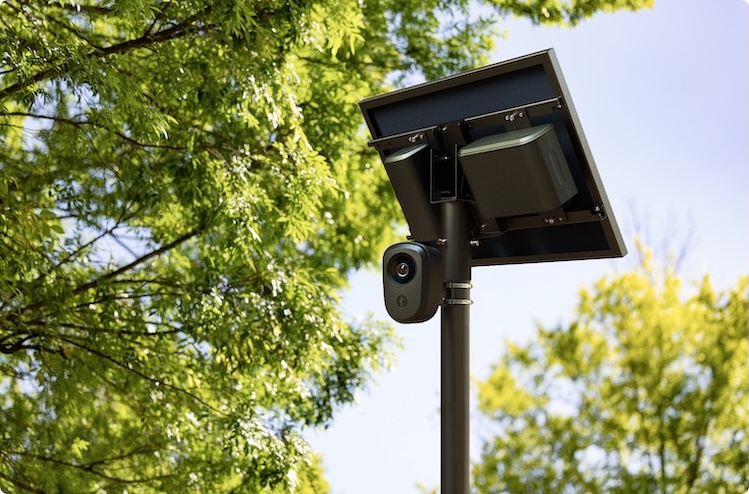
Harris County Sheriff’s Office Adds New Safeguards for Flock License Plate Readers as Three Deputies Face Review
For Harris County residents, the debate over automated license plate reader cameras has moved from questions about whether the technology should remain in use to a more immediate issue: how law enforcement agencies ensure that a powerful investigative tool is used appropriately.
The Harris County Sheriff’s Office announced Aug. 14 that it is implementing new safeguards for its Flock Safety license plate reader network, including an auditing tool designed to identify potentially questionable searches and a requirement that deputies provide a descriptive case code whenever they conduct a license plate search.
The changes arrive little more than two months after Harris County commissioners renewed a separate county contract with Flock Group, Inc. following lengthy public debate over privacy, data sharing, surveillance and public safety.
They also come as HCSO reviews the Flock activity of three deputies after a USA Today reporter contacted the department Friday, Aug. 14, with questions about potentially questionable use of the system.
The deputies’ access to the Flock system has been suspended while administrative reviews are underway.
HCSO Oversees 480 Flock Cameras Across Harris County
The Harris County Sheriff’s Office currently manages 20 Flock Safety license plate reader networks containing a combined 480 cameras.
Many residents may encounter the technology closer to home than they realize. According to HCSO, the networks are primarily owned by municipal utility districts, neighborhood associations and similar local entities that have designated the Sheriff’s Office as system administrator.
That distinction is important because Harris County’s license plate reader network is not simply a collection of county-owned cameras. Across the region, MUDs, homeowners associations, municipalities and other entities have increasingly incorporated automated license plate reader technology into local crime-prevention and investigative efforts.
Flock cameras focus on vehicles and license plates rather than people, according to HCSO. The system does not identify individuals, analyze faces or use biometric data.
Automated license plate readers generally create searchable records showing when and where particular vehicles or license plates were observed, giving investigators another source of information when working cases involving stolen vehicles, violent crimes, missing persons and other investigations.
New Flock Auditing Tool Designed to Flag Potential Misuse
Earlier this week, Flock announced additional privacy, accountability, security and transparency safeguards, including an auditing tool intended to flag possible misuse of the technology.
HCSO said it is putting that tool into use as part of its oversight procedures.
The Sheriff’s Office will also require deputies to enter a descriptive case code for every license plate search, creating an additional record connecting searches to law enforcement activity.
Only authorized law enforcement personnel with approved access can view or search HCSO Flock camera data, according to the agency. Access is logged, and HCSO policy states that license plate reader information may only be accessed for legitimate law enforcement purposes.
Sheriff Ed Gonzalez said the department recognizes both the crime-fighting value of the technology and the responsibility that comes with having access to it.
“Since 2022, the Harris County Sheriff’s Office has used Flock technology to protect our community. The license plate readers have thwarted kidnapping attempts, led to the quick apprehension of armed robbery crews, and helped recover countless stolen vehicles,” Gonzalez said. “But as with any powerful new public safety tool, this technology is subject to abuse. We are committed to showing our community that the Harris County Sheriff’s Office can be trusted to use this technology appropriately, and that we hold ourselves to the highest ethical standards. Any deputy who abuses the public trust will be held fully accountable, both professionally and criminally.”
For residents who have questioned how automated license plate reader searches are monitored, the new auditing requirement directly addresses one of the central concerns surrounding Flock technology: ensuring that searches are connected to legitimate investigations rather than personal or unauthorized purposes.

Three Deputies’ Flock Access Suspended During Administrative Reviews
The safeguards are being introduced as HCSO examines potentially questionable use of its Flock system by three deputies.
According to the Sheriff’s Office, a USA Today reporter contacted HCSO on Aug. 14 regarding the deputies’ activity. The agency subsequently suspended their access to the Flock system and opened administrative reviews.
No determination of wrongdoing has been announced.
HCSO said any policy violations identified during the reviews could result in disciplinary action, including termination. If investigators uncover evidence suggesting potential criminal conduct, that information will be provided to the Harris County District Attorney’s Office, which would determine whether criminal charges are appropriate.
The investigation adds a real-world test to the accountability questions that residents and county leaders have been discussing for months.
Harris County Flock Debate Intensified During June Contract Renewal
The latest HCSO announcement follows Harris County Commissioners Court’s May 28 approval of a contract renewal with Flock Group, Inc., allowing the county’s automated license plate reader and sound detection technology program to continue through June 5, 2027.
The approximately $868,975 renewal was approved 4-0, with County Judge Lina Hidalgo abstaining.
That vote followed extensive public testimony and debate, with residents raising concerns about privacy rights, government surveillance, data-sharing practices, immigration enforcement implications, retention of vehicle information and which agencies or individuals can access the data.
The contract renewal did not authorize hundreds of new county-owned cameras. Rather, it maintained Harris County’s participation in an existing regional system that incorporates cameras owned by multiple public and private entities.
Supporters of the technology pointed to its use in criminal investigations, including cases involving stolen vehicles and violent crime.
“The reality is this technology has helped solve murders, locate dangerous criminals, and recover stolen vehicles,” Harris County Precinct 3 Commissioner Tom Ramsey said during the earlier debate.
Harris County Precinct 2 Commissioner Adrian Garcia also emphasized the need to pair technology with oversight.
“We have a responsibility to keep people safe while ensuring appropriate safeguards are in place,” Garcia said.
Those comments have become particularly relevant as the county confronts questions involving actual use of the technology rather than hypothetical concerns about what misuse could look like.
Privacy and Public Safety Remain Closely Connected
Automated license plate readers have become increasingly common in neighborhoods throughout Harris County and across Texas, particularly as HOAs, MUDs and law enforcement agencies look for additional ways to identify suspect vehicles and develop investigative leads.
Their expansion has also made oversight an increasingly important part of the conversation.
The central question for residents is not simply whether license plate reader cameras can help solve crimes. It is also who can conduct searches, what reasons are considered legitimate, how those searches are documented and what happens when access may have been misused.
During the county’s earlier Flock debate, Harris County Precinct 4 Commissioner Lesley Briones said safeguards could continue evolving alongside the technology.
“We can continue improving our policies to protect privacy while preserving a valuable public safety tool,” Briones said.
HCSO’s new audit system and case-code requirement represent concrete steps in that direction.
At the same time, the administrative reviews involving three deputies illustrate why proponents and critics alike have continued calling for clearly defined rules, searchable audit trails and meaningful consequences when policies are violated.

What Do Flock Cameras Mean for Harris County Neighborhoods?
For homeowners and residents in communities where an HOA, MUD or other local entity pays for Flock cameras, the technology may operate largely in the background until a vehicle theft, burglary or other serious incident brings it into focus.
The cameras can provide investigators with information about vehicles observed at particular locations and times, potentially helping law enforcement establish timelines or identify investigative leads.
But the information also creates a record of vehicle movements, which is why residents and civil-liberties advocates have continued asking how searches are authorized, monitored and shared.
HCSO’s announcement gives residents additional information about that oversight process: approved users are required, system access is logged, searches must serve legitimate law enforcement purposes, descriptive case codes will now be required, and an auditing tool will be used to identify potentially improper activity.
The department’s response to questions regarding the three deputies also establishes that Flock access can be suspended while potential misuse is investigated.
What Happens Next?
The three HCSO administrative reviews will determine whether any department policies were violated. Depending on their findings, the deputies could face disciplinary action up to and including termination.
Any indication of potential criminal wrongdoing would be referred to the Harris County District Attorney’s Office for review.
Meanwhile, Harris County’s Flock contract remains in effect through June 5, 2027, and communities throughout the county will continue using license plate reader technology through networks operated or funded by municipalities, MUDs, neighborhood associations and other entities.
The broader policy discussion is unlikely to disappear.
For Harris County residents, the latest development brings the privacy-versus-public-safety discussion closer to one of its most important questions: whether oversight systems can keep pace with technology that law enforcement says can help solve serious crimes but that also provides access to sensitive information about where vehicles have been observed.
How HCSO handles the current reviews — and how effectively the new safeguards identify and prevent inappropriate searches — could influence public confidence in the technology well beyond these three cases.
Stay tuned to My Neighborhood News for updates on Harris County public safety, local government decisions and issues affecting neighborhoods across the region.

 Tiffany Krenek has been on the My Neighborhood News team since August 2021. She is passionate about curating and sharing content that enriches the lives of our readers in a personal, meaningful way. A loving mother and wife, Tiffany and her family live in the West Houston/Cypress region.