








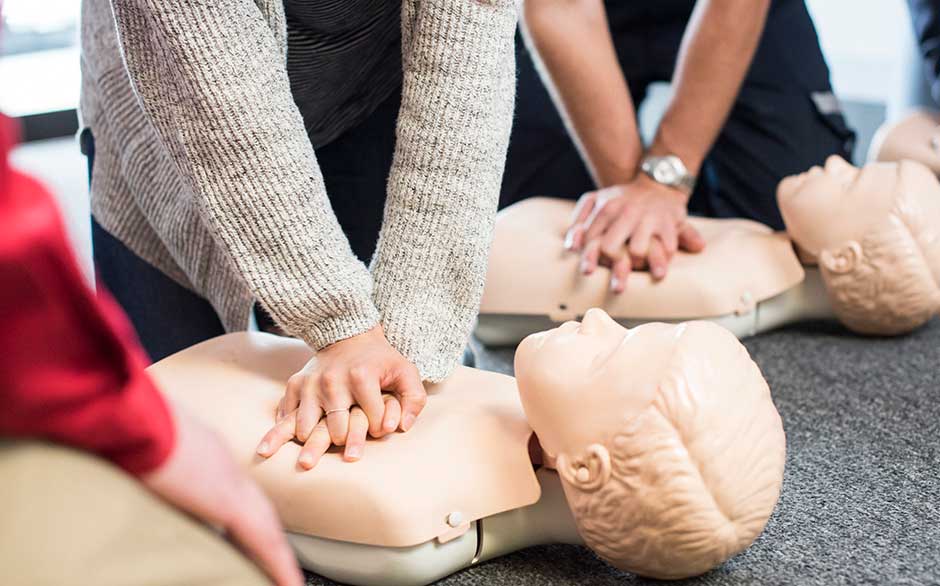
Free CPR and AED Classes Give Caney Mills Residents a Chance to Learn Skills That Can Save a Life
For most families, cardiac arrest is the kind of emergency they hope they will never face. But when it happens, the person standing nearby — a spouse, parent, neighbor, coworker or even a stranger — may suddenly become an important part of the response.
That is why Montgomery County ESD 1 encourages residents to learn CPR and how to use an automated external defibrillator, commonly called an AED, through training offered by Montgomery County Hospital District (MCHD).
For residents of Caney Mills, the opportunity is particularly practical: upcoming Heartsaver CPR AED classes are currently offered at no cost, giving community members a way to learn lifesaving skills before they are ever needed.
Why CPR Training Matters Before First Responders Arrive
When someone experiences cardiac arrest, the heart suddenly stops pumping blood effectively to the brain and other vital organs. Calling 911 is essential, but what happens in the minutes before trained emergency personnel arrive can make a significant difference.
According to the American Heart Association, approximately 350,000 people experience an out-of-hospital cardiac arrest each year in the United States, and about 90% of those incidents are fatal. Immediate CPR can double or even triple a person's chance of survival.
The latest American Heart Association statistics also illustrate how much room remains for communities to improve. Based on 2024 U.S. adult out-of-hospital cardiac arrest data, only about 42% of patients received bystander CPR, while public AED use occurred in about 12.6% of cases. Overall survival to hospital discharge was approximately 10.5%.
Those figures help explain why CPR and AED education matters at the neighborhood level. A trained resident does not replace paramedics or firefighters. Instead, that person may be able to begin lifesaving care during the critical period while emergency crews are responding.
For families in Caney Mills, learning CPR can mean knowing what to do if an emergency happens at home, at work, at a neighborhood gathering, youth sporting event, church, school or community facility.
Montgomery County ESD 1 Partners With MCHD on CPR Education
Montgomery County ESD 1 partners with Montgomery County Hospital District, which provides community education covering adult and child CPR, infant CPR, AED use and techniques for relieving choking in adults, children and infants.
Programs currently available through MCHD include:
- Heartsaver CPR AED
- BLS CPR AED
- Heartsaver First Aid
The courses are offered through the American Heart Association.
The Heartsaver CPR AED program teaches participants how to perform CPR and safely and effectively use an automated external defibrillator. The curriculum is based on current American Heart Association Guidelines for CPR and Emergency Cardiovascular Care.
The course is designed for people with little or no medical training, including those who need an OSHA-compliant CPR course completion card for employment as well as residents who simply want to be better prepared for an emergency.
That accessibility is important because cardiac arrest frequently happens far from a hospital. The American Heart Association notes that roughly 70% of out-of-hospital cardiac arrests occur in homes — meaning the person who needs help could very well be someone the rescuer knows and loves.

Free Heartsaver CPR AED Classes Coming This Fall
MCHD currently lists two upcoming Heartsaver CPR AED (HSCPRAED2025) courses:
Thursday, Nov. 12, 2026
6:00 – 9:30 p.m.
Course fee: $0
Tuesday, Dec. 8, 2026
6:00 – 9:30 p.m.
Course fee: $0
Residents can view the full MCHD community education class calendar, including CPR, First Aid, Safe Sitter and Stop the Bleed training, by clicking HERE.
Questions about classes may also be directed to Ashton at 936-523-1146 or aherring@mchd-tx.org.
AED Training Can Turn a Nearby Device Into a Lifesaving Tool
AEDs are increasingly found in offices, businesses and public gathering spaces, but having the equipment nearby is only part of emergency preparedness. Residents also need to feel comfortable recognizing the device and using it.
An AED analyzes a person's heart rhythm and, when appropriate, can deliver an electrical shock intended to help restore an effective rhythm. Modern AEDs provide step-by-step prompts to guide users through the process.
The American Heart Association reports that immediate CPR combined with AED use can double or triple survival rates, reinforcing the value of teaching residents both skills together.
Businesses, organizations and facilities that have purchased and installed AEDs are also encouraged to register their devices with MCHD. Registration helps MCHD EMS and first responders know where AEDs are available within the community during an emergency.

About Montgomery County ESD 1
The CPR partnership is one part of a much broader public safety role for Montgomery County ESD 1.
Montgomery County ESD 1 is a political subdivision of the State of Texas and was the first Emergency Services District established in Montgomery County. It is governed by five commissioners who live within the district and are appointed to two-year terms by Montgomery County Commissioners Court.
The district's present structure grew from cooperation between two emergency services districts. Effective Oct. 1, 2016, Montgomery County ESD 12 entered into an interlocal agreement with Montgomery County ESD 1 designed to provide more efficient and cost-effective fire protection while expanding the equipment and experienced personnel available to residents of both districts.
On Nov. 7, 2017, voters in both districts approved consolidation, creating the unified Montgomery County ESD 1.
Today, MCESD 1 has 82 full-time employees, covers approximately 200 square miles and operates eight strategically located fire stations. Its crews respond to more than 6,000 emergency incidents annually.
Because of the size of the service area and the department's relationships with other emergency agencies, personnel maintain specialized training in areas that extend well beyond traditional structure fires, including structural collapse response, wildland firefighting, swift-water rescue and rescue diving operations.
For residents of Caney Mills, that emergency response network provides professional help when something goes wrong. CPR and AED training adds another layer — helping residents themselves become better prepared during the minutes before that help reaches the scene.
A Few Hours of Training Could Matter for Years
No one signs up for CPR training expecting to use it the following day. The value is in being prepared for the moment no one can schedule.
Knowing how to recognize cardiac arrest, call for help, begin CPR, locate and operate an AED, respond to choking or provide basic first aid can turn uncertainty into action when seconds matter.
And in a community where firefighters, paramedics and residents all play different roles in emergency preparedness, a trained bystander can become the first link in the chain of survival.
Stay tuned to My Neighborhood News for more local public safety information, emergency preparedness resources and community programs available to area residents.

 Tiffany Krenek has been on the My Neighborhood News team since August 2021. She is passionate about curating and sharing content that enriches the lives of our readers in a personal, meaningful way. A loving mother and wife, Tiffany and her family live in the West Houston/Cypress region.
```

Local business spotlight
Grow your business
where trust already lives.
Let’s introduce your business to the neighbors nearby.
Have a local favorite?
Let’s make an introduction.
Leave your email and our team will reach out with ways to promote your business.
Give a local favorite a little love.
Know a business your neighbors should discover? Tell us who they are.
We couldn’t send that just yet. Please try again.