







Conroe Makes Its Case for U.S. Space Academy, With Hundreds of Acres Available for Potential Campus
What if the next generation of American astronauts, aerospace engineers and space industry leaders went to school in Conroe?
It is an ambitious possibility, but city leaders have decided it is worth pursuing.
The City of Conroe is developing a proposal aimed at bringing the proposed United States Space Academy to Montgomery County, following a unanimous City Council vote Sept. 24 authorizing the city to move forward and spend up to $25,000 to hire a firm to assist with the effort.
The push places Conroe into a much broader competition among communities hoping to help their states make the strongest possible case for an institution envisioned as a new training ground for America's future space workforce.
What Is the U.S. Space Academy?
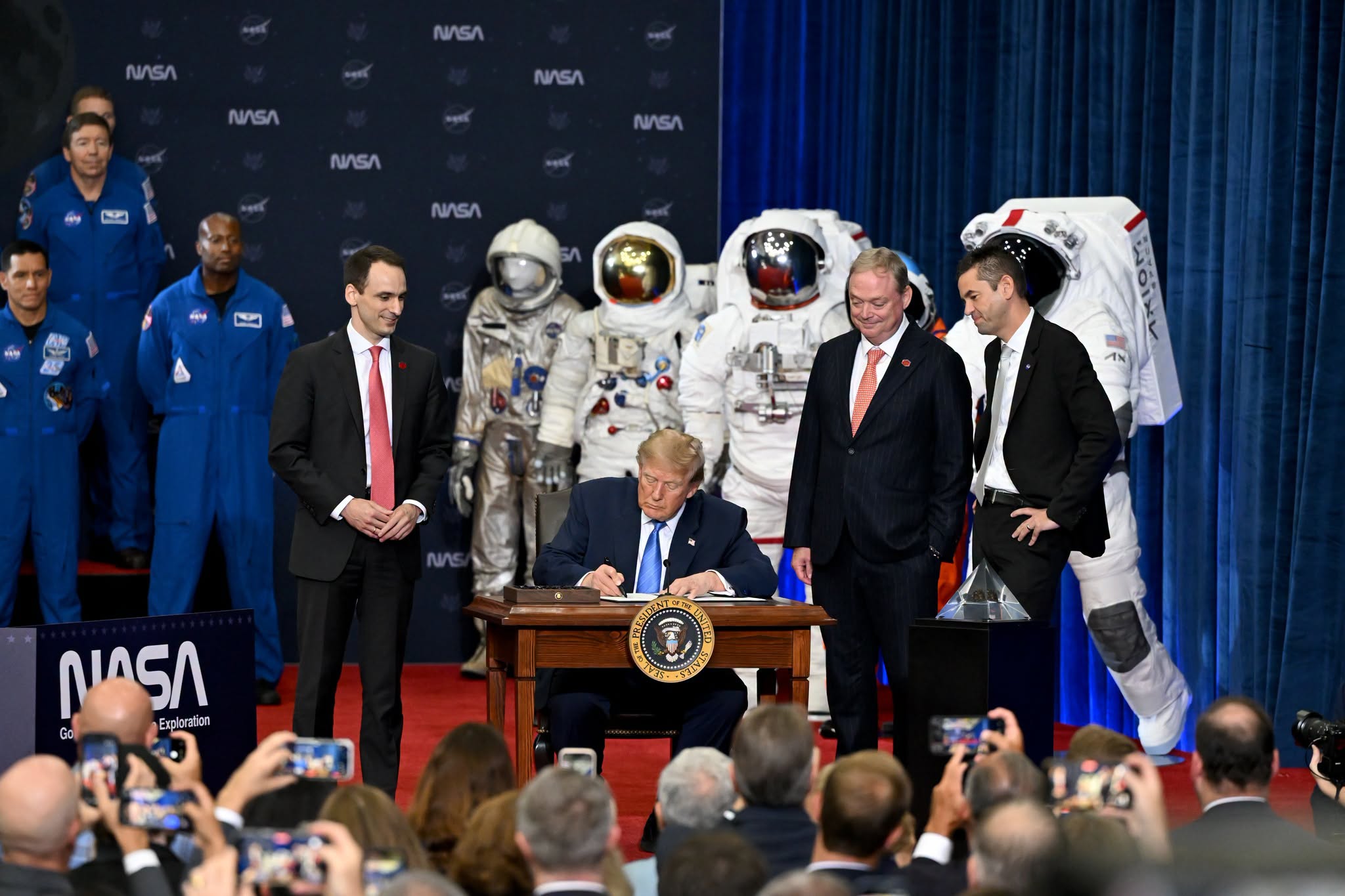
President Donald Trump signed an executive order Aug. 28 at NASA's Johnson Space Center beginning the process of establishing the nation's first United States Space Academy.
The proposed NASA-led federal academy would combine technical education, leadership development and public service while preparing students for careers across the aerospace sector, including engineering, science, astronautics, operations, government and national security.
A presidential commission led by NASA Administrator Jared Isaacman has 120 days from the signing of the executive order to develop recommendations for the president covering the academy's governance, curriculum, service commitments, partnerships and implementation.
That distinction matters. The academy is still being developed, and the current process is a Request for Information, or RFI, rather than a final competition awarding the campus to a particular city or state.
NASA says responses will help the commission shape its recommendations and path toward choosing a location.
States Have Until Oct. 26 to Make Their Case
NASA issued its RFI Sept. 10 seeking information from states interested in hosting and supporting the academy.
Responses are due Oct. 26 at 6 p.m. EDT, and each state is permitted one submission through its governor's designee.
The federal government's preliminary timeline is aggressive.
NASA is targeting a groundbreaking no later than 2027, temporary facilities capable of serving the academy's first 300 students in 2028, and a permanent campus operating by 2031.
States have been asked to provide information about prospective locations, site readiness, infrastructure, environmental and regulatory considerations, nearby educational and industry partners and other resources that could support the academy.
“The location of the U.S. Space Academy is foundational to its success,” NASA Deputy Administrator Matt Anderson said in announcing the RFI.

Why Conroe Believes It Belongs in the Conversation
Conroe City Council members David Hairel and Shana Arthur publicly raised the idea during the Sept. 10 City Council meeting and asked city staff to determine whether Conroe could realistically compete.
Arthur made clear at the time that the effort was exploratory.
“I’m not suggesting Conroe will get it, I’m suggesting to find out if Conroe can compete for it,” she said.
The case city leaders have outlined centers on available land, transportation access, proximity to Houston's aerospace industry and Conroe's existing engineering and technology base.
Arthur has also pointed to the area's experience in subsea, deepwater, energy and petrochemical engineering, industries that routinely design equipment to operate in extreme environments.
Hairel has described the potential academy as a project that could fundamentally alter Conroe's future.
“The Space Academy is going to be... a generational transformational project for Conroe,” Hairel told FOX 26.
The proposal returned to City Council Sept. 24, when council members unanimously authorized moving forward with development of Conroe's proposal and approved spending up to $25,000 to hire outside assistance in preparing it.
Conroe Says It Has the Land NASA Is Looking For
One of the most significant questions surrounding Conroe's effort is whether the city can provide enough land for an institution of this scale.
City leaders say they have enough available land to meet the academy's preliminary site requirements.
NASA's planning assumptions call for a permanent campus spanning no less than 300 acres, with capacity for approximately 1,200 undergraduate students by fall 2031 and room for substantial long-term growth.
At first glance, that requirement could appear larger than Conroe's 248-acre R.A. “Mickey” Deison Technology Park.
But city officials say the potential Space Academy site would not necessarily be limited to Deison alone.
Hairel told FOX 26 that approximately 214 shovel-ready acres are available at Deison Technology Park, with another roughly 400 contiguous acres in a nearby Conroe industrial park.
“We have the land,” Hairel said. “Deison Technology Park, it is shovel-ready. There are approximately 214 acres available right now.”
According to Hairel, the additional property would also give Conroe room for future expansion.
That could be particularly important because NASA's planning documents allow prospective hosts to present either a single site or a coordinated multi-parcel configuration capable of functioning as one campus.
In practical terms, Conroe's pitch could involve considerably more land than Deison Technology Park by itself.
Deison Technology Park Was Built for High-Tech Development
The city's interest in Deison is also consistent with the park's original purpose.
Located near Conroe-North Houston Regional Airport, the technology park was developed specifically to attract research, life sciences, technology and advanced manufacturing projects.
The Conroe Industrial Development Corporation, or CIDC, operates under the supervision of Conroe City Council and uses revenue from a half-cent city sales tax to support economic development projects.
Deison already includes biotechnology manufacturer VGXI, which constructed a large manufacturing facility there to produce plasmid DNA used in vaccines and gene therapies.
Nearby city industrial development areas have also attracted a range of manufacturers, logistics companies and industrial employers, supported by infrastructure that Conroe has developed over a period of years.
For a federal academy expected to blend research, education, technical training and partnerships with industry, that existing economic-development infrastructure could become an important part of Conroe's argument.

A Recent CIDC Agenda Item Adds Another Question
Another recent development involving Deison Technology Park may be worth watching as Conroe assembles its proposal.
At its Sept. 30 meeting, the Conroe Industrial Development Corporation included an agenda item to “repeal the portion of the Tech Park for a new City Economic Initiative.” The agenda also allowed the board to enter closed session to discuss the purchase, exchange or value of real property.
The wording is notable because city leaders earlier this year had discussed setting aside a portion of Deison Technology Park for a separate economic-development initiative.
However, the Sept. 30 agenda does not identify the Space Academy as the reason for reconsidering that land, and minutes from the meeting have not yet been posted on CIDC's official online archive.
For that reason, any direct connection between the Sept. 30 action and the Space Academy proposal remains unconfirmed.
The timing nevertheless makes the disposition of that property something to watch as Conroe moves closer to the state's submission deadline.
Conroe's Location Could Be Another Selling Point
Land is only one part of the decision.
Conroe sits within the broader Houston region that is already home to NASA's Johnson Space Center.
City leaders have also pointed to Conroe-North Houston Regional Airport, nearby higher-education resources, available housing and the Houston area's extensive aerospace, engineering and energy workforce.
Those connections could matter because NASA is not simply asking states to offer a large piece of property. The agency is evaluating the broader ecosystem surrounding prospective campuses, including infrastructure, partnerships and the ability to attract students and faculty capable of competing with other elite educational opportunities.
Conroe's challenge will be turning those individual advantages into a proposal strong enough to stand out within Texas first, then nationally.
Conroe Is Competing for a Place in Texas' Proposal
Conroe will not submit directly to NASA as an independent applicant.
Because NASA allows only one submission per state, Conroe's proposal must ultimately become part of Texas' broader response.
That means the city's first competition is effectively within Texas itself as communities and state officials determine which location offers the strongest case.
Only after that process will NASA and the presidential commission evaluate the state's submission alongside those from other states.
For residents, that is an important distinction. Conroe has authorized a serious effort to pursue the academy, but no decision has been made that the institution will come to Montgomery County, or even that Conroe will ultimately be the site Texas puts forward.
What Happens Next
The next several weeks could reveal considerably more about Conroe's strategy.
The city must complete its proposal in time for Texas to meet NASA's Oct. 26 deadline, while questions remain about the exact property configuration Conroe would offer, what partnerships would be included and whether additional local or state financial commitments would accompany the proposal.
The city has authorized up to $25,000 for professional assistance in preparing its pitch, although the firm being hired has not yet been publicly identified.
What has become clearer is that Conroe's proposal involves more than simply trying to fit a national academy onto the existing footprint of Deison Technology Park.
Between the shovel-ready acreage at Deison and additional contiguous industrial property, city leaders say they have hundreds of acres available, existing infrastructure and enough room to accommodate not only NASA's initial vision but potentially the academy's long-term growth.
Whether that combination is enough to bring the U.S. Space Academy to Conroe remains to be seen.
But with the federal process now underway, Conroe has made clear that it wants to be part of the conversation.

 Tiffany Krenek has been on the My Neighborhood News team since August 2021. She is passionate about curating and sharing content that enriches the lives of our readers in a personal, meaningful way. A loving mother and wife, Tiffany and her family live in the West Houston/Cypress region.
Local business spotlight
Grow your business
where trust already lives.
Let’s introduce your business to the neighbors nearby.
Have a local favorite?
Let’s make an introduction.
Leave your email and our team will reach out with ways to promote your business.
Give a local favorite a little love.
Know a business your neighbors should discover? Tell us who they are.
We couldn’t send that just yet. Please try again.