






Beyoncé and Kelly Rowland Return to Houston for Knowles-Rowland House Opening, Bringing New Hope to Residents Facing Chronic Homelessness
A Houston building that once gave young people a place to gather is beginning a new chapter as a home for people who have gone without one. For Beyoncé Knowles and Kelly Rowland, the transformation also marks a return to a place closely connected to their childhoods, their church community and their earliest efforts to give back to their hometown.
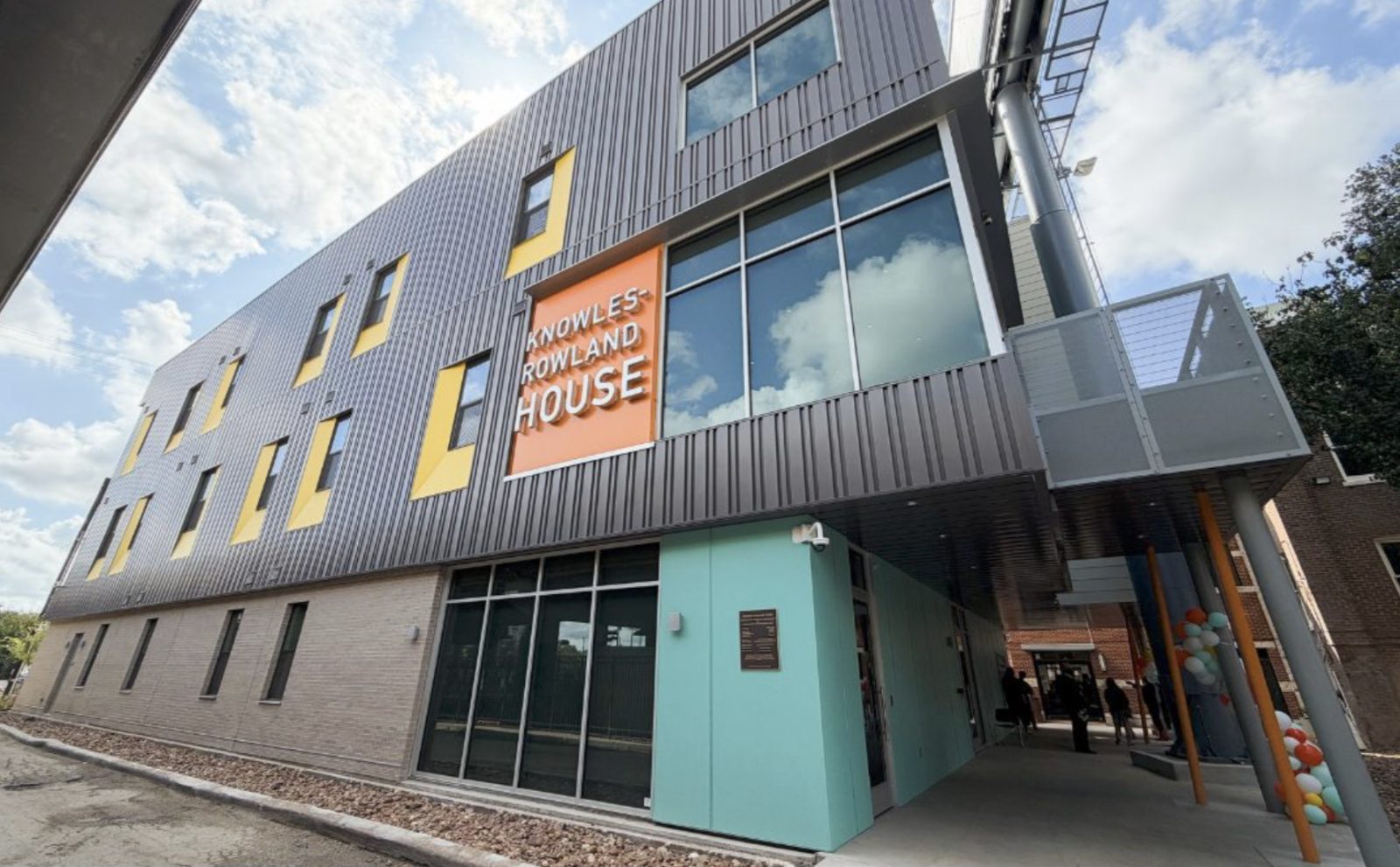
The Knowles-Rowland House celebrated its ribbon cutting on October 13, 2026, bringing 31 permanent supportive housing apartments to Midtown Houston for individuals exiting chronic homelessness. Beyoncé, her mother Tina Knowles and fellow Destiny's Child member Kelly Rowland attended the ceremony, celebrating the redevelopment of a property that has carried their names for more than 25 years.
The opening comes at a consequential time for Houston and Harris County. Although the region has earned national recognition for reducing homelessness, thousands of residents continue to experience housing instability, and local organizations are working to expand the availability of permanent housing and supportive services.
Harris County Housing & Community Development announced the milestone in a social media post, recognizing the Harris County Housing Finance Corporation, Bread of Life, Inc. and Housing Alliance HTX for their collaboration. The department also thanked the Knowles and Rowland families for supporting efforts to prevent and end homelessness in Harris County.
“Together, we’re expanding housing opportunities and building a stronger Harris County,” the department wrote.
Beyoncé and Kelly Rowland's Houston Roots Are Central to the Knowles-Rowland House Story
Long before Beyoncé and Kelly Rowland became internationally recognized entertainers, their lives were closely connected to St. John's Downtown Church in Houston, where their families developed relationships with the congregation and its community outreach programs.
The original Knowles-Rowland Center for Youth was established in 1999, during the early years of Destiny's Child's success. Proceeds from the group's first single helped fund the gymnasium and youth center, creating a space where neighborhood children and teenagers could participate in activities and spend time together.
The center carried the names of Beyoncé and Rowland, reflecting their connection to the church and their involvement in supporting Houston's young people. What began as an investment in youth programming has now become a housing development serving another vulnerable population.
At the October 13 ceremony, the connection between the entertainers and their hometown was part of the occasion. Tina Knowles spoke about the family's history with the church and how participating in its volunteer activities helped shape Beyoncé, Kelly Rowland and Solange Knowles during their younger years. Beyoncé also expressed appreciation for the church's role in their upbringing.
The ceremony brought multiple generations of the family together. Beyoncé's daughters, Blue Ivy and Rumi Carter, attended, with Rumi participating in the ribbon cutting. The moment connected the property's history as a youth center with its new role in the neighborhood.
While Beyoncé and Kelly Rowland are best known for their music careers, their connection to Knowles-Rowland House predates the current redevelopment by decades. Their involvement began with helping establish the original youth center, and their return for the housing development's opening brought renewed attention to the work of Bread of Life and its community partners.
The project's public financing and development records identify nonprofit, government and investment partners responsible for the housing conversion. The available information does not establish how much, if any, of the redevelopment's financing was personally contributed by Beyoncé or Rowland.

Homelessness in Harris County: What the Latest Numbers Reveal
The opening of Knowles-Rowland House comes as Houston-area organizations continue working to address a housing problem that affects thousands of people across Harris County and neighboring communities.
According to the Coalition for the Homeless of Houston/Harris County, the 2026 Point-in-Time Count identified 3,321 people experiencing homelessness across Harris, Fort Bend and Montgomery counties. That was nearly unchanged from the 3,325 people counted in 2025.
Of those counted in 2026, approximately 1,270 were living without shelter, while more than 2,050 were staying in emergency shelters or other qualifying temporary accommodations. Within Harris County specifically, the unsheltered count declined slightly, from 1,210 in 2025 to 1,189 in 2026.
2026 Houston-Area Homelessness Snapshot
|
Category
|
Number
|
|---|---|
|
People experiencing homelessness across Harris, Fort Bend and Montgomery counties in February 2026
|
3,321
|
|
People living without shelter across the three-county region in February 2026
|
1,270
|
|
People entering homelessness for the first time in federal fiscal year 2025
|
7,110
|
|
Households housed through the regional homeless response system in calendar year 2025
|
2,133
|
Sources: Coalition for the Homeless, 2026 State of Homelessness report and Point-in-Time Count. The figures represent different reporting periods and measures.
The annual count provides a snapshot rather than a complete accounting of everyone who experiences homelessness throughout the year. The Coalition's 2026 State of Homelessness report offers a broader picture, documenting 35,988 people served through the regional homeless response system during 2025 and 7,110 people who entered homelessness for the first time during federal fiscal year 2025.
Houston has nevertheless made substantial progress over the longer term. The Coalition reports that regional homelessness has declined by more than 60% since 2011, while partners participating in The Way Home, the region's coordinated homeless response system, have helped house more than 35,400 people since 2012.
The causes of homelessness are also more varied than commonly assumed. The Coalition identifies economic crises, including job loss and expenses exceeding household income, as a major contributing factor in local homelessness. For some residents, the loss of a paycheck or the inability to keep up with housing costs can begin a difficult period of instability. Others face additional challenges involving disability, physical health, mental health or substance use.
These circumstances help explain why permanent supportive housing projects such as Knowles-Rowland House are an important part of the regional response. Rather than providing only a temporary place to sleep, they combine long-term housing with services intended to help people remain housed.
Stable Housing With Support Close at Hand
Located on Bread of Life's campus at 2019 Crawford Street, Knowles-Rowland House pairs permanent housing with services intended to help residents maintain stability. Harris County's project description identifies all 31 apartments as serving individuals experiencing homelessness whose incomes are at or below 30% of area median income.
The project is sponsored by Bread of Life, Inc., a nonprofit affiliated with St. John's Downtown Church whose work focuses on homelessness, health and hunger relief.
Bread of Life describes the development as serving people who have experienced chronic homelessness, citing the U.S. Department of Housing and Urban Development's definition, which generally includes individuals who have been homeless continuously for at least one year or experienced at least four episodes of homelessness within three years totaling at least 12 months.
Sixteen apartments include accommodations for people with mobility or sensory impairments. Through a partnership with Temenos Community Development Corporation, Bread of Life's sister organization, residents will have access to case management, mental health counseling, substance abuse treatment, life skills training and nutrition assistance.
The county's plans also describe assistance connecting residents with benefits and income support, along with peer specialists who help with community socialization, safety and wellness.
These services can be especially important for individuals who have spent extended periods without stable housing. Securing an apartment addresses the immediate need for shelter, but rebuilding routines, managing health conditions and navigating everyday responsibilities can require continued assistance.
Permanent supportive housing allows eligible residents to remain housed as long as needed, rather than imposing a short-term shelter stay. According to the project's financing partners, rents are planned to be fully subsidized through HUD's Project-Based Voucher program, administered by the Houston Housing Authority.
 (Source: Harris County Housing & Community Development)
A Former Houston Youth Center Finds a New Purpose
The property's transformation follows years of damage and uncertainty about its future.
Hurricane Harvey damaged the original Knowles-Rowland Center for Youth in 2017, and a fire caused further damage in 2021. According to Bread of Life, the building was subsequently used primarily for storage before plans moved forward to convert it into permanent supportive housing.
Rather than demolishing the existing structure and starting over, the redevelopment repurposes a building already familiar to the St. John's Downtown Church community.
Plans for Knowles-Rowland House include community meeting rooms, dining areas, supportive service offices and training rooms, along with controlled access to the property.
Its Midtown Houston location also places residents near METRO light rail, providing public transportation connections to employment opportunities, medical appointments, community services and other destinations throughout the city.
For longtime church members and those who remember the original youth center, the building's new purpose carries a particular connection to its past. The same property that once supported Houston children and teenagers will now provide housing and services to adults working toward greater stability.
Harris County Funding and Community Partnerships Helped Bring It Together
The redevelopment was made possible through a combination of public funding, nonprofit partnerships and private investment.
Harris County identifies approximately $7.2 million in American Rescue Plan Act funding for acquiring the existing gymnasium and redeveloping it into supportive housing.
The AIC CEI-Boulos Opportunity Fund, a partnership between Allivate Impact Capital and CEI-Boulos Capital Management, separately announced a majority equity investment in the project in 2024.
Bread of Life and Temenos Community Development Corporation partnered to develop and operate the apartments, combining experience in community assistance, affordable housing and supportive services.
The project also reflects the broader approach Harris County and Houston have taken toward homelessness, with government agencies, nonprofits, philanthropic organizations and housing providers working together to address needs that no single organization can resolve independently.
That work is continuing beyond the opening of Knowles-Rowland House.
On October 7, 2026, just six days before the ribbon cutting, the Coalition for the Homeless announced Pathways to Independence, a new $48 million regional initiative intended to expand homelessness prevention and assistance across Houston, Harris County, Fort Bend County and Montgomery County.
The three-year initiative launched with $34 million committed by local philanthropic organizations, including the Brown Foundation, Cullen Foundation, Houston Endowment, Kinder Foundation and Sarofim Foundation. It is designed to complement existing permanent housing programs by providing more flexible assistance, improving coordination with healthcare and behavioral health providers, and helping individuals resolve housing crises more quickly.
While Knowles-Rowland House focuses specifically on individuals experiencing chronic homelessness, the newer regional initiative seeks to reach people with a wider range of housing needs, including those who may be able to regain stability through short-term assistance.
Together, these efforts illustrate how Houston's response to homelessness continues to evolve, even as the latest figures show that the number of people experiencing homelessness remains a significant concern.

What Happens Next for Knowles-Rowland House?
With the ribbon cutting complete, attention turns to the development's role in providing long-term housing and services to eligible residents.
The opening of 31 apartments will not resolve homelessness across Harris County, but it adds permanent housing capacity for individuals who may have faced some of the greatest barriers to finding and keeping a home.
For Beyoncé and Kelly Rowland, the occasion also represents another chapter in a relationship with Houston that began long before their international careers. A building established with support from their early success in Destiny's Child has been given a new purpose, one that remains connected to the church and neighborhood where their community involvement began.
And for the people who will call Knowles-Rowland House home, the most meaningful part of the development may be considerably simpler: having a place to return to at the end of the day, with the privacy, stability and support that permanent housing can provide.
More information about the development is available on Bread of Life's Knowles-Rowland House webpage. Residents interested in learning more about homelessness in Houston and Harris County, including opportunities to volunteer or support local housing initiatives, can visit the Coalition for the Homeless of Houston/Harris County. Individuals seeking assistance can also call 2-1-1 for referrals to local resources.
Stay tuned to My Neighborhood News for updates on housing, nonprofit initiatives and community developments across Houston and Harris County.

 Tiffany Krenek has been on the My Neighborhood News team since August 2021. She is passionate about curating and sharing content that enriches the lives of our readers in a personal, meaningful way. A loving mother and wife, Tiffany and her family live in the West Houston/Cypress region.
Local business spotlight
Grow your business
where trust already lives.
Let’s introduce your business to the neighbors nearby.
Have a local favorite?
Let’s make an introduction.
Leave your email and our team will reach out with ways to promote your business.
Give a local favorite a little love.
Know a business your neighbors should discover? Tell us who they are.
We couldn’t send that just yet. Please try again.