






Before You Cook Thanksgiving Dinner in Westheimer Lakes, Don't Overlook These Common Holiday Safety Mistakes
Thanksgiving brings some of the year's best reasons to gather around the table, but getting that holiday meal ready involves more than following a favorite family recipe. Between preparing the turkey, managing several dishes at once and welcoming guests, a busy kitchen can create opportunities for foodborne illness, burns and cooking fires.
For families in Westheimer Lakes, a little preparation before Thanksgiving Day on Thursday, November 26, can make a meaningful difference. The same goes for protecting curious pets who may be hoping for a few holiday leftovers of their own.
Here's what residents should know before the cooking begins.
Thanksgiving Food Safety Starts Before the Turkey Goes in the Oven
Some of the most important Thanksgiving food safety precautions happen before anything reaches the stove.
According to the Centers for Disease Control and Prevention (CDC), preventing foodborne illness begins with four simple practices: clean, separate, cook and chill.
Handwashing is especially important. Anyone helping prepare food should wash their hands with soap and water for at least 20 seconds before cooking, after handling raw meat or eggs, after touching pets and before serving food.
Fresh fruits and vegetables should be rinsed under running water, including produce that will be peeled. Firm produce, such as potatoes, can be scrubbed with a clean produce brush. Soap, detergent and household cleaning products should never be used to wash produce.
Raw turkey, however, should not be rinsed. Washing poultry can spread harmful bacteria through splashing water onto nearby countertops, utensils and other foods.
Preventing cross-contamination is equally important. Use separate cutting boards and knives for raw poultry and ready-to-eat foods, including vegetables, bread and fruit. Wash countertops, cutting boards, knives and serving utensils thoroughly with hot, soapy water between tasks. After cleaning, sanitize food-contact surfaces using an appropriate product according to its label directions.
Never place cooked turkey on a platter that previously held raw poultry unless the platter has been properly washed.

Cooking Temperatures and Thanksgiving Leftovers: What the USDA Recommends
The U.S. Department of Agriculture (USDA) reminds families that appearance and cooking time alone cannot determine whether turkey is safe to eat.
Turkey must reach an internal temperature of 165°F, measured with a food thermometer in the thickest part of the breast, innermost portion of the thigh and innermost portion of the wing.
Stuffing prepared inside the turkey must also reach 165°F at its center, although the USDA recommends cooking stuffing separately for more consistent results.
Residents should also remember these Thanksgiving food safety guidelines:
-
Thaw safely: Allow approximately 24 hours in the refrigerator for every 4 to 5 pounds of frozen turkey. For cold-water thawing, allow about 30 minutes per pound, changing the water every 30 minutes, and cook immediately afterward. Never thaw turkey on the countertop.
-
Keep hot foods hot: Maintain prepared hot dishes at 140°F or higher.
-
Keep cold foods cold: Refrigerate cold dishes or serve them over ice to maintain 40°F or below.
-
Follow the two-hour rule: Refrigerate perishable foods and leftovers within two hours of serving.
-
Store leftovers properly: Refrigerated Thanksgiving leftovers should be eaten within four days or frozen for longer storage. Reheat leftovers to 165°F.
Serving smaller portions and replenishing dishes as needed can help keep foods at appropriate temperatures while everyone enjoys the meal.
Thanksgiving Is the Leading Day for Home Cooking Fires
Foodborne illness is not the only concern during holiday meal preparation.
According to a November 2026 report from the National Fire Protection Association (NFPA), Thanksgiving is the leading day of the year for home cooking fires in the United States.
An estimated 1,139 home cooking fires were reported to U.S. fire departments on Thanksgiving Day in 2024, more than three times the daily average.
The biggest concern is unattended cooking.
For households in Westheimer Lakes, keeping someone responsible for the kitchen while food is cooking is one of the simplest ways to reduce the risk.
The NFPA recommends staying in the kitchen while using the stovetop, remaining at home while roasting a turkey and checking food regularly. Oven mitts, paper towels, dishcloths and other flammable materials should be kept away from burners.
Children and pets should remain at least three feet away from cooking areas. Pot handles should be turned away from the front of the stove, and families should test smoke alarms before the holiday.
Keep a lid nearby when cooking with oil. If a small grease fire develops, a properly fitting lid can be slid over the pan to smother the flames before turning off the burner, provided it is safe to do so. Never pour water on a grease fire. If a fire cannot be controlled safely, leave the area and call 911.
Families planning to deep-fry a turkey should be especially cautious. The NFPA strongly discourages turkey fryers that use large amounts of hot cooking oil because of serious fire and burn risks. Oil-free alternatives offer another way to prepare a fried-style turkey.

Don't Forget Thanksgiving Food Safety for Dogs and Cats
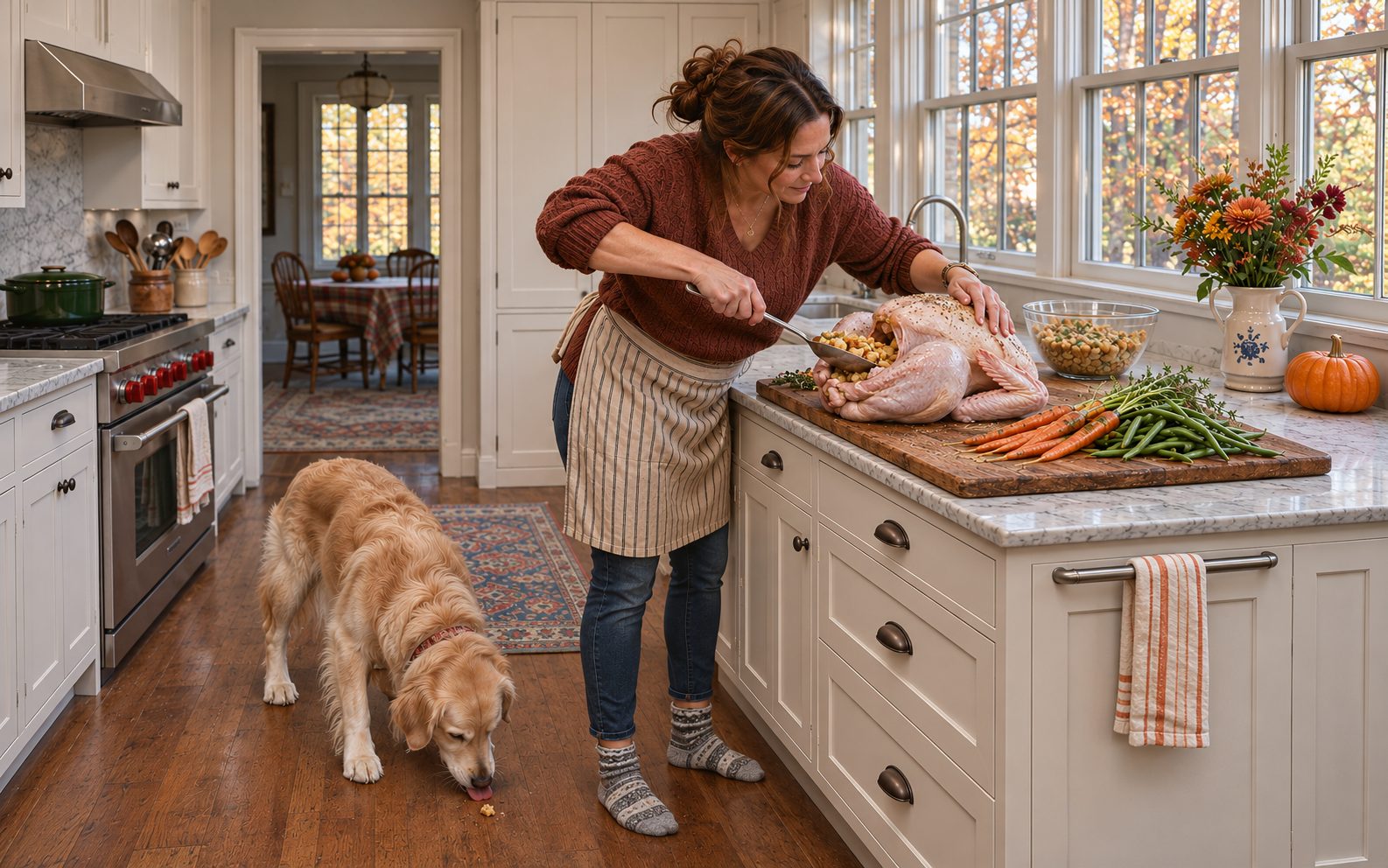
Pets are part of many family Thanksgiving celebrations, but not everything on the holiday table belongs in their food bowls.
The American Veterinary Medical Association (AVMA) advises keeping pets away from turkey bones, fatty meats, gravy, stuffing and rich holiday desserts.
Foods containing onions, garlic, grapes, raisins, chocolate or the artificial sweetener xylitol can be dangerous to pets. Raw yeast dough also presents serious risks.
Small portions of thoroughly cooked, plain, boneless, skinless turkey are generally safe for many pets, but food specifically prepared for animals is usually the better holiday treat.
Guests should be reminded not to slip table scraps to pets without checking with their owners. Turkey carcasses, bones and food waste should be placed in secure trash containers that animals cannot access.
A Safe Thanksgiving Makes Room for More Family Time
A successful Thanksgiving doesn't require a perfect meal or a spotless kitchen. It comes from sharing time with family, friends and neighbors while taking reasonable steps to protect everyone gathered around the table.
For Westheimer Lakes residents hosting this year, keeping food at safe temperatures, practicing good kitchen hygiene, staying attentive while cooking and watching out for pets can help prevent common holiday mishaps.
Stay connected with My Neighborhood News for more Thanksgiving safety reminders, holiday ideas and helpful information for local families.

 Tiffany Krenek has been on the My Neighborhood News team since August 2021. She is passionate about curating and sharing content that enriches the lives of our readers in a personal, meaningful way. A loving mother and wife, Tiffany and her family live in the West Houston/Cypress region.